How to Stop Porn Addiction: Real Solution for a Pure & Focused Life
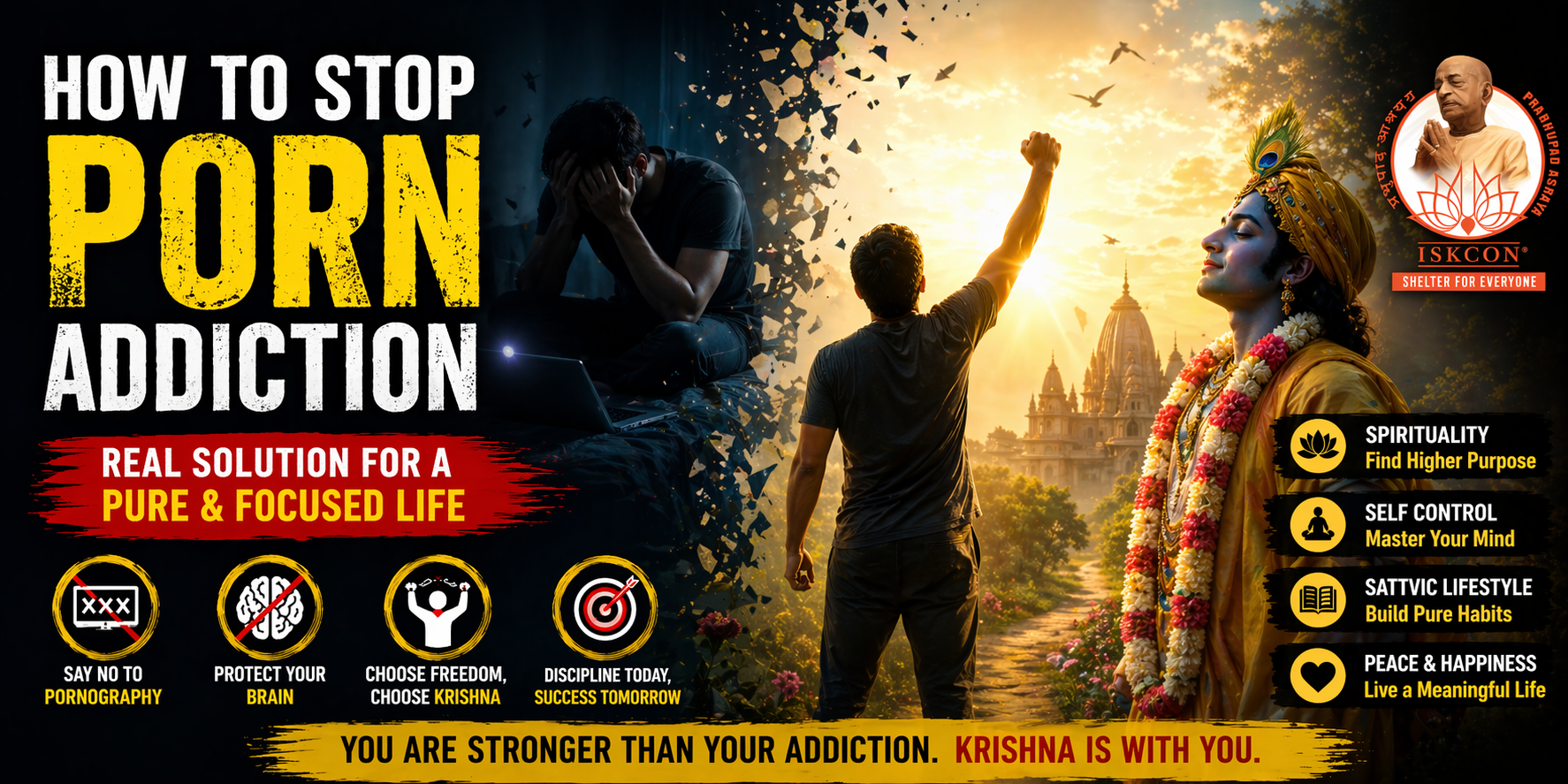
Introduction: A Hidden Problem Destroying Lives In today’s digital age, there is a habit quietly affecting the lives of millions — pornography. In the beginning, it is just curiosity, but slowly it turns into a habit that controls the mind. A person feels guilt, loses focus, and becomes weak from within. If you too are going through this struggle, understand one thing — you are not alone. And the most important thing: its solution is possible. In this blog, you will get a science + spirituality based real solution for porn addiction recovery. What is Porn Addiction? (Simple Understanding) Addiction means — when you cannot control something, but instead, that thing controls you. Porn addiction works in the exact same way: You decide “this is the last time” But after some time, the same cycle repeats again This is not just a problem of willpower — it is a dopamine loop formed inside the brain. This is the reason why porn addiction recovery seems so difficult. Effects of Porn on the Brain (Science + Spiritual Truth) The biggest damage occurs to your brain. Scientific Effects: Excess dopamine release → brain overload Decrease in motivation and focus Real life starts feeling boring All of these combine to create serious effects of porn on the brain. Spiritual Perspective: As taught in the Bhagavad Gita — “An uncontrolled mind is the biggest enemy.” Porn addiction makes the mind even more uncontrolled. Porn Addiction Effects on Life (Reality Check) If this habit is ignored, its impact is seen in every area of life: Mental Effects: Anxiety Overthinking Low confidence Emotional Effects: Guilt Loneliness Shame Physical Effects: Low energy Weak discipline Spiritual Effects: Impurity of mind Loss of focus Disconnection from higher purpose All of these together create strong porn addiction effects that gradually weaken your life. Why It’s So Hard to Quit? (Understand the Root Cause) You are not weak — the system is powerful. Reasons: Instant pleasure (easy dopamine) Habit loop Lack of higher engagement The mind always runs towards easy pleasure. That is why quitting an addiction without a replacement is difficult. Practical Steps for Porn Addiction Recovery Now let’s talk about real solutions: Awareness & Acceptance The first step is to accept — without self-hate. Replace, Don’t Just Remove If you only remove the habit, the mind will go back to the same place. Replace it — with learning, service (seva), and productive work. Control Your Environment Limit phone usage Identify triggers Make your alone time productive Discipline Your Routine Early wake-up Exercise Fixed schedule All these steps combined form a strong porn addiction recovery process. Spiritual Solution: Real Game Changer This is the most powerful part. Real control comes when you get a “higher taste.” The teachings of Lord Krishna say: “To let go of a lower pleasure, a higher pleasure is necessary.” Practical Spiritual Tools: Hare Krishna Mahamantra chanting Satsang (good association) Daily reading of Bhagavad Gita When the mind gets higher engagement, lower habits automatically become weak. Daily Routine to Break Addiction Follow a simple daily system: Morning: Chanting + reading Day: Busy & productive routine Evening: Avoid triggers Night: No mobile before sleep Consistency is the real power. Real Transformation Mindset A relapse is not a failure Progress can be slow — but it is possible Discipline > Motivation Your goal is not to become perfect; it is to become better. Conclusion: You Can Change Your Life Remember the most important thing: You are not your mind — you can become its master. If you make a sincere effort and build a spiritual connection, no addiction can control you. Final thought: “When you choose a higher purpose, lower habits naturally drop away.” Kya aapko iss translation mein SEO meta title/description include karwana hai, ya blog ke layout ko aur engage-friendly banana hai?
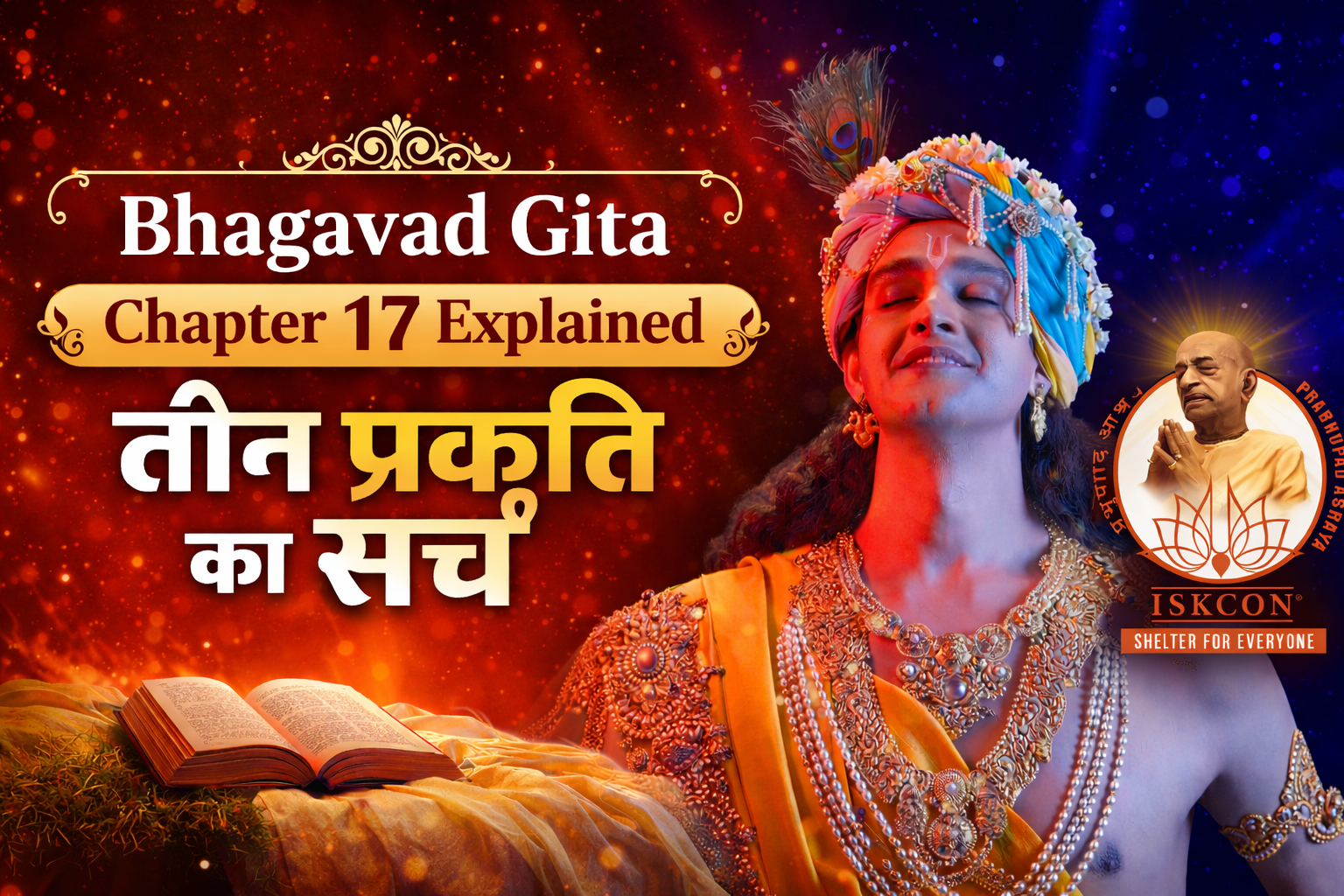
Bhagavad Gita Chapter 17 Explained – Teen Prakriti Ka Sach
Introduction: Which Nature Do You Belong To? In today’s times, many people want to understand why their thinking, decisions, and behavior are the way they are. A clear and deep answer to this is found in Bhagavad Gita Chapter 17, which is called “Shraddha Traya Vibhaga Yoga”. In this chapter, it is explained that every person’s faith (shraddha) is according to their nature — and that nature is of three types: Sattvic, Rajasic, and Tamasic. Bhagavad Gita Chapter 17 Explained (In Simple Language) The central idea of Bhagavad Gita Chapter 17 Explained is that a person’s faith forms their identity. Krishna says that according to the type of faith a person holds, their nature and life become accordingly. Therefore, if we understand our faith, we can also understand the direction of our life. The Truth of Three Natures – Sattvic, Rajasic, Tamasic Explained Sattvic Nature (Pure Disposition) In Sattvic Rajasic Tamasic Explained, the Sattvic nature is considered the highest. People of this nature are peaceful, truthful, and fond of knowledge. These people take interest in learning the Bhagavad Gita and spiritual knowledge. Their life is based on service, simplicity, and balance. Rajasic Nature (Influence of Desire and Action) In Rajasic nature, desire, ambition, and the craving for results are primary. Such people work for success, fame, and status. In this nature, a person experiences high anxiety and stress. According to Krishna teachings for life, performing action (karma) is necessary, but there should be no attachment to its fruits. Tamasic Nature (Ignorance and Laziness) In Tamasic nature, ignorance, laziness, and delusion are primary. People of this nature often make wrong decisions and take no interest in spiritual growth. Gita Wisdom states that this nature leads a person towards degradation. From Food to Faith – Importance of Gita Chapter 17 In Bhagavad Gita Chapter 17 Summary, special importance is also given to food (aahar). Food is of three types: Sattvic food – pure and nourishing Rajasic food – spicy and overly stimulating Tamasic food – stale and impure Sattvic Rajasic Tamasic food according to Gita directly affects a person’s mind and thinking. Types of Faith in Bhagavad Gita – Analysis of Faith Understanding Types of Faith in Bhagavad Gita is extremely important: Sattvic faith – faith in truth and God Rajasic faith – faith in success and power Tamasic faith – faith in superstition and ignorance These three types of faith determine the path of a person’s life. How to Identify Your Nature According to Gita To identify your nature, you can ask yourself a few questions: Am I looking for peace and balance? Am I chasing only success and status? Is my thinking clear, or am I often confused/deluded? The answers to these questions will clarify your nature. Gita Chapter 17 Life Lessons Some important life messages are obtained from this chapter: Strive to elevate your faith to a higher level Adopt a Sattvic lifestyle Keep your food and thoughts pure Move forward towards a spiritual life All these points are truly a part of Spiritual knowledge. Conclusion: The Power to Change Your Nature The most important message of this chapter is that a person can change their nature. According to the teachings of Lord Krishna, through practice and awareness, a person can elevate from Tamasic to Rajasic, and from Rajasic to Sattvic state. When a person becomes established in the Sattvic state, peace, clarity, and purpose manifest naturally in their life. Final Thought If you want to bring lasting change into your life, regularly study the Bhagavad Gita Summary. The principles of the Bhagavad Gita are not just theories; they provide a practical guide for living life. Kya aapko iss translation mein SEO headings, meta description, ya keywords optimize karwane hain?
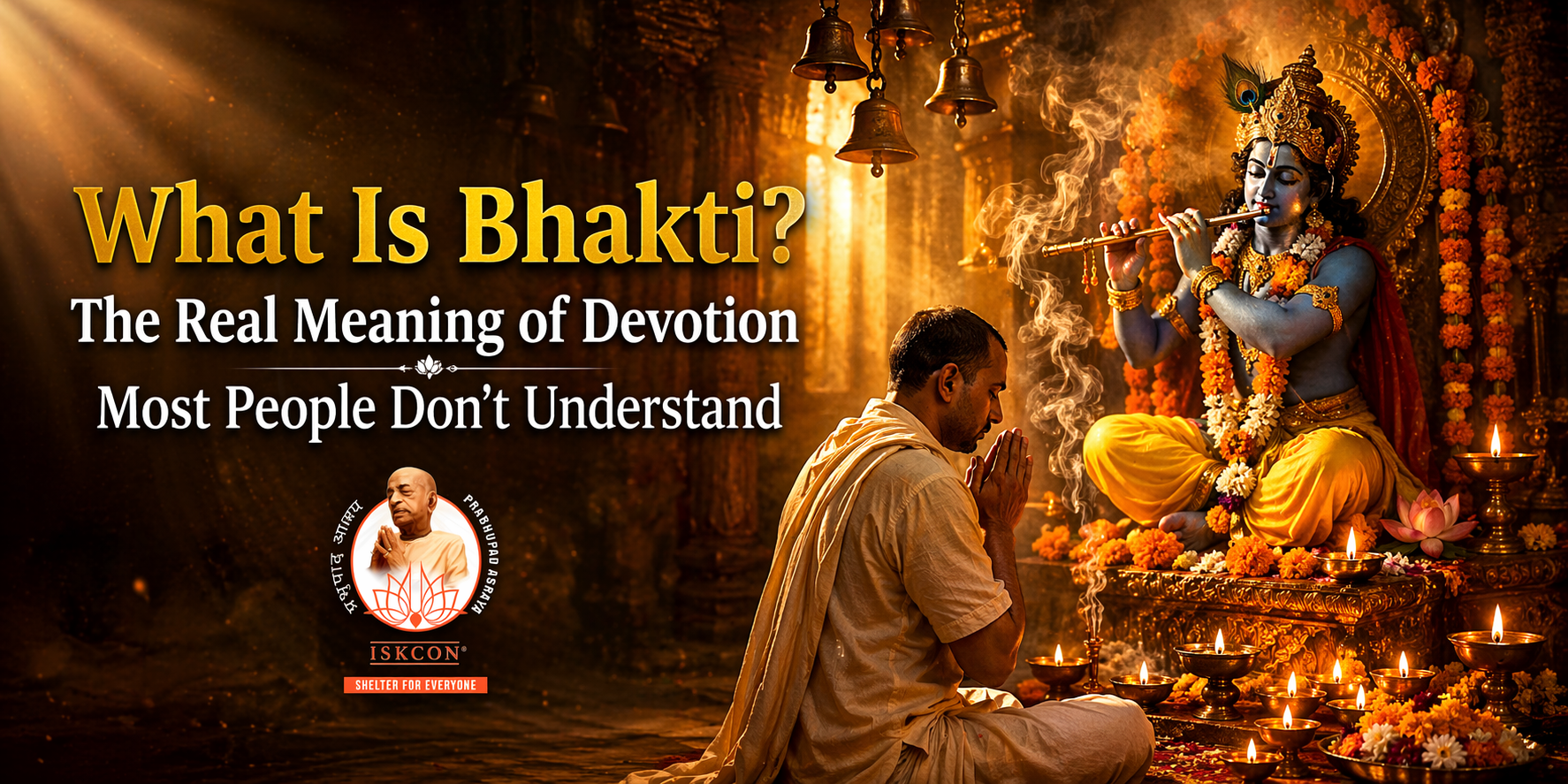
What Is Bhakti? The Real Meaning of Devotion Most People Don’t Understand
Introduction: Why Do We Feel Empty Despite Having Everything? In today’s time, almost every person is chasing something or the other — money, success, relationships, respect… But here is an honest question — Even after having all of this, why do we feel empty from within? Have you ever noticed? A goal is achieved… you get happiness for a short while… and then the mind again starts looking for something new. I have also passed through this exact same phase. And in the middle of this search, one word came up repeatedly — Bhakti. But then a doubt arose… What is bhakti actually? Is it just rituals and worship? Or is it something much deeper? What Is Bhakti? (Simple Understanding) If we understand in simple language — what is bhakti or what is meant by bhakti — Then Bhakti means: Developing a loving relationship with God. The real answer to what is the meaning of bhakti is not about how many rituals you perform… The real meaning is how connected your heart is with Krishna. Bhakti is not fear-based — “If I don’t perform worship, something wrong will happen” Bhakti is love-based — “I want to connect with Krishna because He is mine” This is the true starting point of Bhakti. What Is Bhakti Yog? (The Most Natural Path) Now the next question comes — what is bhakti yog? Bhakti Yog means the path of devotion — where a person connects with God through love, remembrance, service, and surrender. Spiritual paths are generally said to be three: Karma Yoga Jnana Yoga Bhakti Yoga And to be honest, Bhakti is the most natural. Because every human being is already loving someone or something — a person, a thing, or a dream. Bhakti Yoga simply redirects that love towards Krishna. And when love is placed in the right spot… life starts settling down. Why Is Bhakti So Powerful? Now it is important to understand — how does Bhakti work? It’s simple… Bhakti directly connects the soul to the Supreme. In the Bhagavad Gita, Krishna gives assurance that His devotee is never destroyed, and He invites us to remember Him and become His devotee. This is not just a theory… it is a practical experience. When the heart gets the right connection… anxiety begins to decrease… clarity begins to come… And life gradually starts feeling stable. What Is Bhakti Movement? (Heart Revolution) Now let’s understand a little historical angle — what is bhakti movement and who started bhakti movement? Technically, Bhakti was not started by a single person. Bhakti is eternal. However, from time to time, great saints revived it, such as Ramanujacharya, Madhvacharya, and Chaitanya Mahaprabhu. The Bhakti movement was a spiritual revolution that brought devotion to common people. The message was simple: God is available for everyone. Why Were Ordinary People Attracted to Bhakti? Now an important question — why do you think ordinary people were attracted to bhakti? The answer is very simple. In Bhakti, there are no restrictions: No qualification is needed No caste barrier No special background required Only one thing is needed — a sincere heart. And when people understood that God can connect with them personally, naturally people started getting attracted. Main Features of Bhakti (Core Understanding) If we look at — what were the main feature of bhakti — Then here are some important points: Simplicity Universality Personal connection with God Naam Japa (chanting) Satsang (holy association) Seva (selfless service) In traditional Bhakti, there are 9 processes as well, such as hearing, chanting, remembering, serving, etc. But the overall essence is simple — connecting from the heart. What People Misunderstand About Bhakti Nowadays, people misunderstand Bhakti. Some people think Bhakti is only for old age. Some people think Bhakti is emotional weakness. Some people think Bhakti means renouncing everything. But the reality is that Bhakti is the highest intelligence. Bhakti does not make you run away from life… it teaches you how to live life in the right way. My Personal Realization To be honest, Bhakti didn’t become clear to me in a single day either. I was also confused — what is the purpose of life, who is God. But when I sincerely started reading the Bhagavad Gita and understood the teachings of the Acharyas, clarity gradually began to dawn. Bhakti did not remain a theory… it became an experience. I understood that Krishna is not just a concept — He is actively guiding us. We just need to understand Him. How Bhakti Changes Life When you practice Bhakti, changes come naturally: Fear decreases Mind becomes peaceful Decisions become clear Life feels meaningful Problems remain, but the perspective to handle them changes. And most importantly — you feel that you are not alone. Final Thought: So What Is Bhakti? If asked again — what is bhakti? Then the answer is simple. Bhakti is neither just a religion nor just a ritual. Bhakti is a living relationship with Krishna. Where there is love, trust, and connection. And when this connection is built, life transforms automatically. A Simple Invitation If you also want to actually understand Bhakti — not just theory, but practically — Then start with the Bhagavad Gita, connect with devotees, and gradually experience it yourself. Because Bhakti is not something to just read about… it is something to live. Hare Krishna Kya aapko iss translated post ke liye SEO meta description ya tags chahiye?
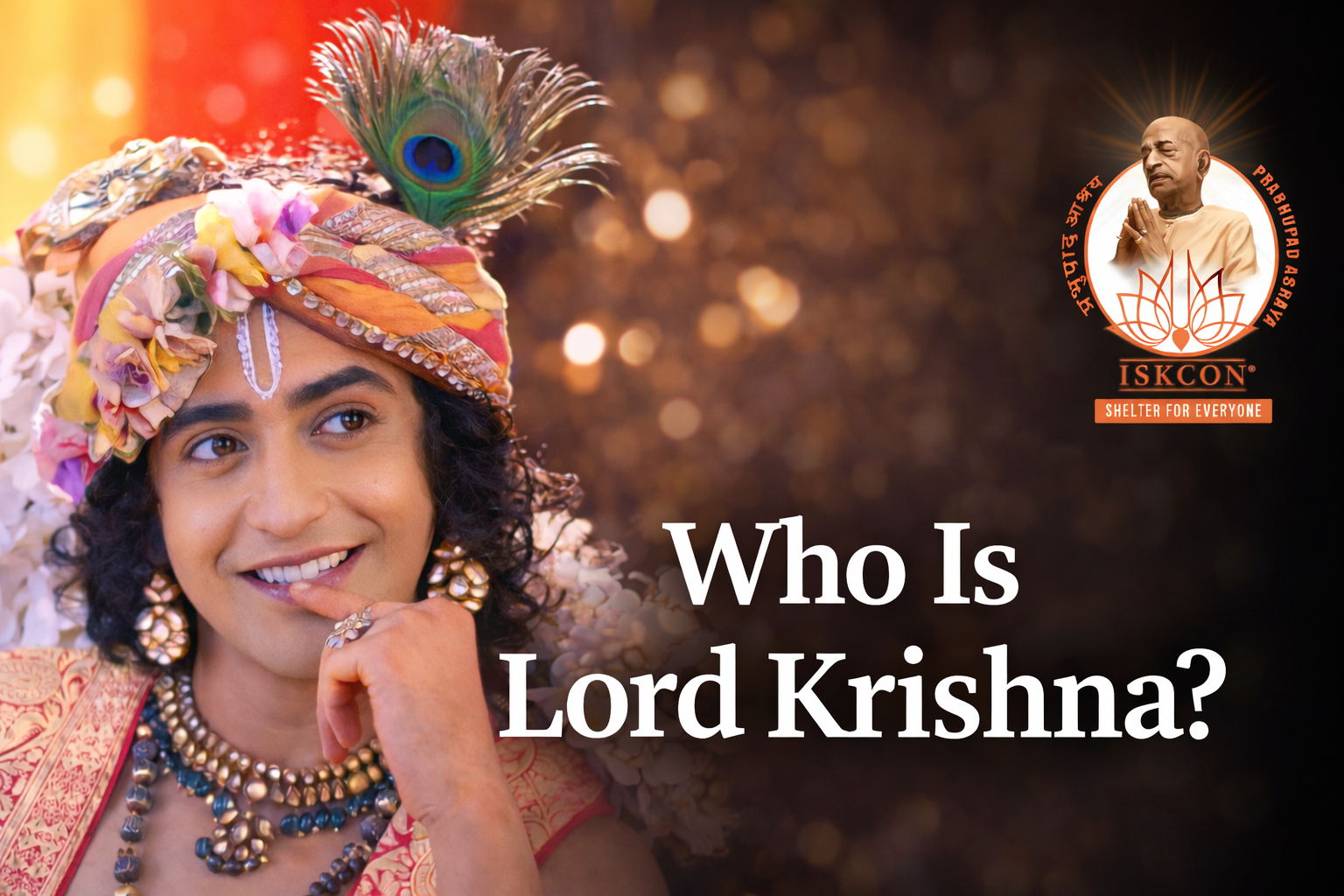
Who Is Lord Krishna? The Truth I Discovered While Studying the Gita
A Question I Never Really Understood Being born and brought up in a typical Indian (especially Hindi-speaking) family, I was always surrounded by devotion. There were pictures of different gods in the house, festivals were celebrated with enthusiasm, and stories from scriptures were often heard. But somewhere deep inside, there was always one confusion that I never really voiced: If there are so many gods… then who is actually supreme? Among all these divine personalities, Lord Krishna always stood out to me — but in a very confusing way. I would often see his pictures as a small baby — crawling, smiling, and stealing butter. And honestly, I used to wonder: How can a small child perform such extraordinary, almost impossible tasks?Who exactly is Krishna? Is He just a character from stories?Is He God?Or is He a historical personality whose life has been exaggerated over time? These questions stayed with me for years… without any clear answer. The Turning Point: When I Opened the Gita Everything began to change in the year 2022. It was during the lockdown — a time when the whole world had paused. There was nowhere to go, nothing urgent to chase, and for the first time, there was space to reflect. Out of curiosity, I decided to read the Bhagavad Gita. Not casually… but seriously. And that is where things started to shift. While reading Chapter 7, I came across a verse that quite literally shook my understanding: मत्त: परतरं नान्यत्किञ्चिदस्ति धनञ्जय ।मयि सर्वमिदं प्रोतं सूत्रे मणिगणा इव ॥ (Bg. 7.7) Krishna says:“There is no truth superior to Me. Everything rests upon Me, like pearls are strung on a thread.” This was not a symbolic statement.It was direct. Absolute. And at that moment, a very real question arose within me: Why is Krishna speaking like the Supreme? So… Who Is Lord Krishna? Really? As I continued reading, more clarity began to unfold. Krishna Himself explains: सर्वयोनिषु कौन्तेय… अहं बीजप्रद: पिता ॥ (Bg. 14.4)“I am the seed-giving father of all living beings.” सर्वस्य चाहं हृदि सन्निविष्टो… (Bg. 15.15)“I am seated in everyone’s heart.” And then, from the Brahma-samhita: īśvaraḥ paramaḥ kṛṣṇaḥ… sarva-kāraṇa-kāraṇam“Krishna is the Supreme Controller, the cause of all causes.” In simple terms, what I began to understand was this: Krishna is not one among many gods.Krishna is the source of everything. Not just a divine figure…but the origin of all existence. Not Just a God in Stories Growing up, Krishna was often presented through stories — especially His childhood pastimes and His relationship with Radha. But the Gita presents a very different, deeper perspective. Krishna says: जन्म कर्म च मे दिव्यम्… (Bg. 4.9)“My birth and activities are divine.” And also: नाहं प्रकाश: सर्वस्य… (Bg. 7.25)“I am not revealed to everyone.” This means something very important. Krishna is not a mythological character.He is a divine reality — but not everyone can understand Him. Even His relationship with Srimati Radharani is not ordinary. rādhā-kṛṣṇa eka ātmā… (CC Ādi 4.56) It is a spiritual exchange — beyond material interpretation. The more I read, the clearer it became: We often misunderstand Krishna because we try to judge Him through a material lens. Seeing Krishna Through the Gita’s Eyes The Bhagavad Gita slowly revealed a complete picture. Krishna is not just a teacher in the Gita — He is The Creator न च मत्स्थानि भूतानि… (Bg. 9.5) The Maintainer मयाध्यक्षेण प्रकृति:… (Bg. 9.10) The Supreme Controller ईश्वर: सर्वभूतानां… (Bg. 18.61) He is not separate from creation — yet not limited by it. This was a completely different understanding from what I had grown up with. Why Krishna Feels So Personal One of the most beautiful realisations was this: Krishna is not distant. He is deeply personal. He tells Arjuna: भक्तोऽसि मे सखा चेति… (Bg. 4.3)“You are My devotee and My friend.” And when Arjuna is confused, he surrenders: शिष्यस्तेऽहं… (Bg. 2.7)“I am Your disciple.” Krishna becomes: A friend A guide A protector And finally says: सर्वधर्मान्परित्यज्य… (Bg. 18.66)“Surrender unto Me, I will protect you.” At that point, Krishna stopped feeling like a distant God…and started feeling like someone very close. Understanding Krishna Through His Relationships Naturally, many questions arise. His father is Vasudeva, who carried Him across the Yamuna to safety — a moment filled with divine protection. His principal queens include Rukmini and Satyabhama. The story of Rukmini’s marriage, where Krishna carried her away with divine courage, reflects a deeper principle — that the Lord responds to sincere devotion. Krishna accepted Sandipani Muni as His teacher, showing that even the Supreme Being sets an example for the world by following discipline. His sister, Subhadra, is also part of His divine pastimes and plays an important role in the Mahabharata. But one realisation stands above all: These are not ordinary events.They are transcendental pastimes, meant to elevate our understanding — not limit it. My Most Personal Realization The biggest transformation in my understanding came when I read the Bhagavad Gita as it is, presented by His Divine Grace A.C. Bhaktivedanta Swami Prabhupada. For the first time, Krishna was not just explained…He was revealed. By great fortune, I came in contact with ISKCON and began practising bhakti. And today when I reflect, I genuinely feel the following: If I had not received this knowledge…I would not be where I am today. Krishna, to me now, is the following: All-attractive All-loving Always present And I truly feel deeply fortunate to be connected to this path. What Changes When You Understand Krishna When this understanding becomes real, life begins to change. Fear starts reducing: न मे भक्त: प्रणश्यति (Bg. 9.31)“My devotee never perishes.” Clarity increases: मन्मना भव… (Bg. 9.34)“Always think of Me.” And purpose becomes clear: कौमार आचरेत्प्राज्ञो… (SB 7.6.1) Life is no longer random.It becomes meaningful. So… Who Is Lord Krishna for Me Now? After this journey, if someone asks me the following: Who is Lord Krishna? My answer is simple. Krishna is not just God. He is: My guide My well-wisher The one who understands me better than I

Where Was God? Understanding the Yamuna Boat Tragedy
The Boat fell in Yamuna river in Gokul (Yamuna Boat Tragedy) I have been seeing for a couple of days that people are talking about the Yamuna boat tragedy, which took place on the 10th of April. Seriously, I did not know about the incident in the past because I keep myself away from social media and all, but seriously, when I heard this news and saw the misconceptions occurring among the devotees and the non-devotees, I thought, Let’s talk about this matter and clarify all the confusions. The auspicious incident or game of karma There is one controversy going on among the devotees and the non-devotees: why did this incident happen to the people who went to Vrindavan? Vrindavan is the home of Krishna (the God), and if they had gone there, then why did they lose their lives? In defence, devotees are also making defensive actions against them, but personally I am also not finding any convincing answers from devotees; that is why I am writing this blog. Devotees do not have karma Yes, it is there. I know it’s hard to believe that devotees don’t undergo karma, but we’ll cover that in my next blog. Here, there are also devotees who lost their lives while singing “Radha Radha” before they died. This material-life argument comes from the atheistic class that does not chant Radha Rani’s name. Why did they have to die? Why did God do wrong to them? So let us understand this in my next paragraph ‘Good’ or ‘bad’ is like assuming our false Dad Let’s say you went to the theatre to watch a movie, and there you saw that my hero was getting beaten by the villain, and then you left after the interval. You did not wait to watch the rest of my movie. You said, ‘Oh, this is a very disappointing movie because the hero is getting beaten.’ I will not go inside to watch movie.’ But in reality, as we all know, after the interval, the hero beats the villain; he achieves his glory, and the movie ends. Therefore, the story is complete. But that person who watched only half the movie did not understand the whole story. The same is the case here: those who are saying that God has done wrong with them People do not know the complete truth. Those who have died, have they seen where they have gone after death? They think that when a person dies, everything finishes, but the reality is we know that after the body, the soul travels from body to body. Even if the body seems to be finished, the soul does not, so those who are saying that God has done wrong with them – do they really know where they are exactly now as souls? Do they know where a person goes if he leaves his body in the Yamuna? If you do not know, then kindly shut your mouth and read the next paragraph. Where did they actually go? Honestly, I also do not know where they have exactly gone because I am not Krishna, but I can predict from shashtras where they might have gone. But one thing is 100% sure: that they have not gone to hell. But why so? Because it is mentioned in the Bhagavad Gita, “na me bhaktaḥ praṇaśyati”, that my devotees never perish, this is guaranteed that they have not gone to hell. But the question is still the same: where did they exactly go? there are many scriptural references and examples that have one achieve the supreme abode just by taking the name of Krishna So they were chanting Radha’s name during their final time, so there are very high chances that they have gone to Goloka, the spiritual kingdom of God. They also have some further advantages which also help in their achieving a supreme abode. Advantages as follows: Leaving the body in the Yamuna, which is one of the purest. Leaving the body in Vrindavan Dham, which is the home of my God. They died while doing sadhu sang. cc madhya 22.54Sadhu-sanga, “sadhu-sanga”, sarva-shastra kayaLava-matra sadhu-sanga sarva-siddhi haya So after considering all the above evidence, it is confirmed that they must have gotten the highest achievement of human life, which is Goloka Vrindavan. Was their killing necessary? People might argue that, okay, this can be understood – that their death was not a normal death – but still, death is death. Why did Krishna kill them? Was it necessary? My understanding is yes, it was necessary because nowadays we see that so many people are using dharma. for bad purposes, either to gain followers or to impress the opposite gender, and on the other hand, people now are treating Vrindavan as Goa and coming to Vrindavan only for fun, not for sadhu sanga or for learning the art of bhajan; it’s simply material perception, enjoyment and exploitation. So Krishna is the leela purushottam, so this is the leela of Krishna to keep these people away so that they become fearful to come to Vrindavan and remain away. So this is our Krishna; what does he do? Only he knows. Ignorance Breakdown – The mouth is shut now This blog of mine is a slap on the face of those who criticise Krishna for the incident above, but if they read this blog, then they would be awakened from their sleep. As an admin of Prabhupad Ashraya, it is my duty to rectify the controversies of Sanatan Dharma, so I tried to do so in today’s blog, and I hope I might have cleared your doubts, but still, if you have any doubt regarding this topic, then kindly write in the comment section, or you can directly contact me through the ‘Contact Us’ page of our website. I will be glad to respond to you and clear your doubts. Hare Krishna
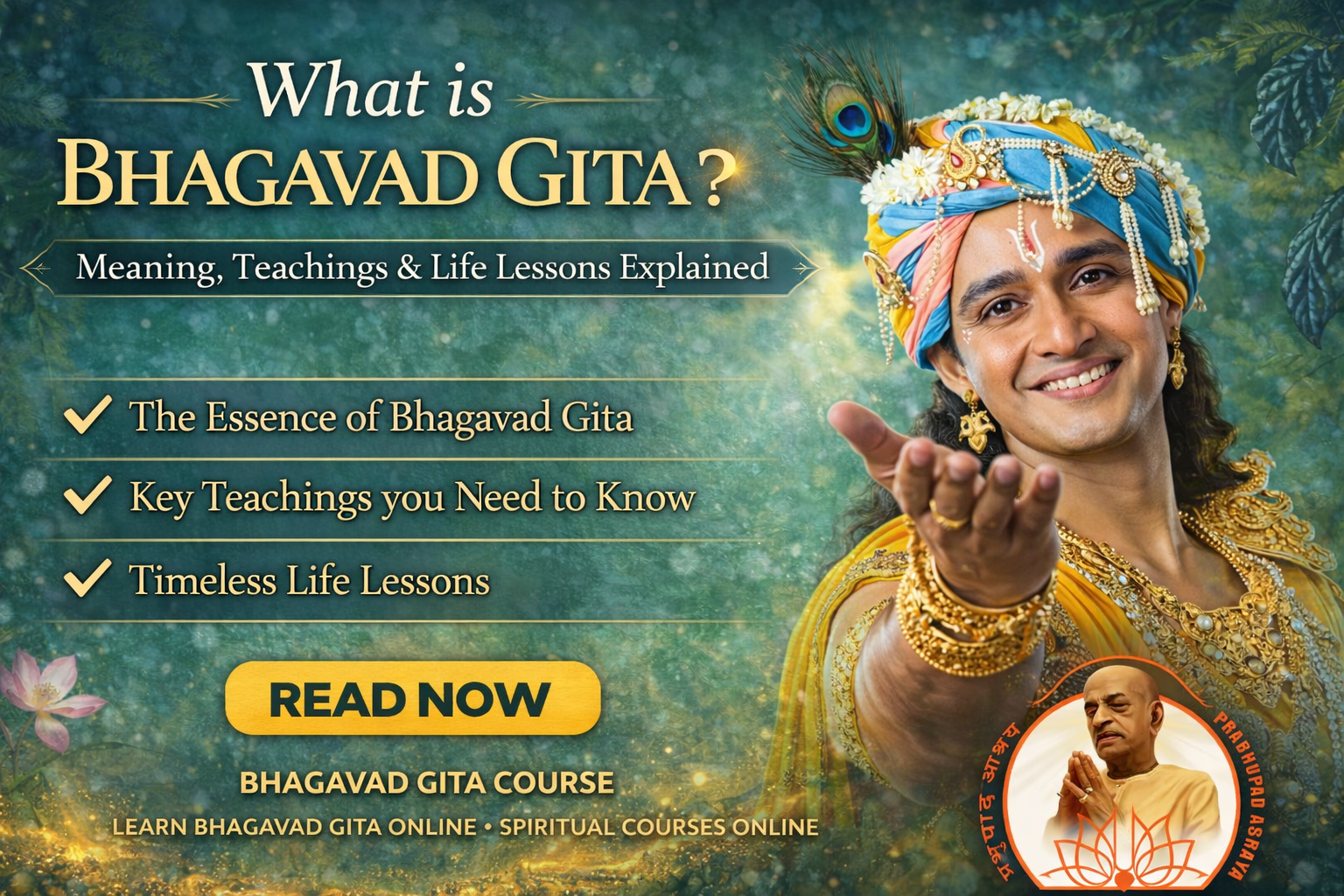
What is Bhagavad Gita? Meaning, Teachings & Life Lessons Explained
Introduction – Why Is There Confusion in Life? In today’s times, almost every person is going through some kind of confusion — career pressure, relationship challenges, overthinking, and the uncertainty of the future. Everyone is looking for just one thing: clarity. In this context, a question arises — What is Bhagavad Gita? Is it just a religious scripture or a real solution for life? The Bhagavad Gita is no ordinary book. It is a divine guide that tells us how to live life, how to think, and how to understand our true purpose. In today’s digital age, people are actively searching for: bhagavad gita for beginners, learn bhagavad gita online, online gita classes, and spiritual courses online. All of this is an indication that people are feeling the need for authentic knowledge. What is Bhagavad Gita? (Meaning Explained) First of all, it is essential to understand — What is Bhagavad Gita? The Bhagavad Gita is a divine conversation between Lord Shri Krishna and Arjuna, which took place on the battlefield of Kurukshetra in the Mahabharata. “Bhagavad” means God, and “Gita” means song. In this way, Bhagavad Gita means “Song of God”. This conversation happened when Arjuna was in the biggest moral and emotional confusion of his life. At that time, the knowledge given by Krishna is what is known as the Bhagavad Gita. Therefore, when we ask What is Bhagavad Gita, it means — divine guidance received during difficult times in life. Why Bhagavad Gita Was Spoken Arjuna was a powerful warrior, but at the time of battle, his mind became weak. He raised questions regarding his duty. His questions were: Why should I fight this war? Is this right? What is my duty? These questions are visible in every person’s life even today. Today’s youth is also struggling with career confusion, emotional stress, and decision-making challenges. That is why the Bhagavad Gita is not just an ancient scripture, but a practical guide for modern times. Core Teachings of Bhagavad Gita Karma Yoga – Focus on Duty Krishna says that a person should perform their duty without worrying about the results. This makes the mind steady and reduces stress. Jnana Yoga – Knowledge of the Soul A primary principle of the Bhagavad Gita is that a person is not the body, but the soul. With this understanding, both fear and attachment decrease. Bhakti Yoga – The Supreme Path In the end, Krishna explains the path of devotion (bhakti), where a person offers love and surrender towards God. This is considered the simplest and highest path. Bhagavad Gita for Beginners If someone wants to start, understanding the Bhagavad Gita is not difficult. For a beginner: Read a little every day Understand the meaning Apply it in your life In today’s times, options like bhagavad gita course, learn bhagavad gita online, and online gita classes make learning even simpler. Bhagavad Gita for Modern Youth Today’s youth is facing the highest amount of mental pressure. The teachings of the Bhagavad Gita directly help in: Controlling overthinking Reducing anxiety Making career decisions Understanding life’s purpose This is the reason why many people nowadays are joining spiritual courses online and online gita classes. Why Bhagavad Gita is Still Relevant Today Despite being thousands of years old, the Bhagavad Gita is just as relevant today. The reason for this is: Human problems have not changed Mind and emotions are still the same today Questions of life remain the same today Therefore, the Bhagavad Gita is a timeless scripture that is useful in every era. Life Lessons from Bhagavad Gita A person should keep control over their mind Stay focused on duty Accept situations Have faith in God Renounce ego All these learnings can transform a person’s life. Prabhupad Ashraya Insight The correct way to understand the Bhagavad Gita is to understand it “as it is”. This means: Not adding any kind of imagination or speculation Accepting Krishna’s message in its direct form The ultimate goal of the Bhagavad Gita is to attain Krishna consciousness. Common Misconceptions About Bhagavad Gita It is only for elderly people — Incorrect It is only a religious scripture — Incorrect It is difficult to understand — Incorrect It is a practical life guide for everyone. How to Start Your Journey If you seriously want to understand the Bhagavad Gita, then: Join a bhagavad gita course Use the learn bhagavad gita online option Attend online gita classes Today, many spiritual courses online are available that guide you step-by-step. Conclusion – Final Understanding So, in the end, the answer to the question: What is Bhagavad Gita? The Bhagavad Gita is a scripture that shows a person the right path to live life. It is not just a book, but a divine guide. If a person adopts its principles, their life can transform. Hare Krishna If you want to understand the Bhagavad Gita in depth, you can join our free 10-day Bhagavad Gita course. Kya aapko iss translation mein SEO optimization ya Call-to-Action buttons edit karwane hain?
Who Wrote Mahabharata? The Divine Story Behind Its Creation
Introduction – A Simple Question, But a Deep Answer “Who wrote the Mahabharata?” — this seems like a very simple question, but its answer is just as deep and spiritual. In today’s times, many people consider the Mahabharata to be just a story or mythology, but in reality, it is an Itihasa — which means “that which actually happened.” Therefore, understanding the answer to this question is not just knowledge, but also a step toward spiritual awakening. The Mahabharata is not merely a scripture; it is a divine arrangement — where God’s will, the sage’s wisdom, and the propagation through tradition all come together. In this blog, we will learn who wrote the Mahabharata, how it was written, and why this scripture remains so important even today. Who Wrote Mahabharata? (महाभारत किसने लिखी?) The author of the Mahabharata is Maharishi Ved Vyas, whom we also know by the name Veda Vyasa. The word “Vyasa” means — one who divides and arranges knowledge. Vyasadeva did not just compile the Mahabharata, but he also collected and divided the Vedas, which is why he is called Veda Vyasa. He presented the Mahabharata as an Itihasa, meaning it is not a fictional story, but a historical-spiritual scripture. But the story does not end here — the next part is even more miraculous. The Divine Writing – The Pastime of Ved Vyas and Lord Ganesha When Ved Vyas Ji resolved to write the Mahabharata, he invited Lord Ganesha to scribe this scripture. Lord Ganesha put forward a condition — “I will write without stopping; you must dictate without stopping.” Vyas Ji also put forward a condition — “You will not write anything without understanding it first.” After this divine dialogue, the writing of the Mahabharata began. Whenever Vyas Ji needed time, he would recite very profound and complex verses, which took Lord Ganesha a little time to comprehend. What is the deeper meaning behind this? This teaches us that spiritual knowledge should not be accepted without understanding it. Every verse of the Mahabharata carries a deep philosophical truth. Guru–Shishya Parampara – The Real Flow of Knowledge The knowledge of the Mahabharata was not merely written down; it was also disseminated through the guru-disciple succession (guru-shishya parampara). Ved Vyas’s disciple, Vaishampayana, recited this scripture to King Janamejaya. After that, Sauti (Ugrashrava) recited it to an assembly of sages. This helps us understand that real knowledge does not come from books alone, but through lineage/tradition. In today’s time, we gather information from the internet and books, but spiritual knowledge remains incomplete until it is received through a authentic disciplic succession (parampara). Was Mahabharata Written by One Person? (Modern Perspective) Some modern scholars believe that the Mahabharata was not written at one single time, but evolved over several centuries. In the beginning, it existed as an oral tradition, which was later given a written form. Over time, a few stories were added to it. However, according to Indian tradition, its original author is Ved Vyas alone. He is the one who compiled and structured this knowledge. Therefore, it would not be wrong to say — The writing of the Mahabharata was done by Vyas Ji, but its inspiration was divine. Why Mahabharata is Not an Ordinary Book The Mahabharata should never be viewed as a normal book. It does not contain merely the story of a war, but also: Analysis of Righteousness (Dharma) and Unrighteousness (Adharma) The law of Action (Karma) and its fruits Political science and ethics (Neeti Shastra) And most importantly — the Bhagavad Gita That is why it is often referred to as the “5th Veda”. This scripture is a complete life manual that provides solutions for every situation. Spiritual Understanding – Krishna’s Divine Plan From the perspective of Prabhupad Ashraya, the Mahabharata is not just the creation of Ved Vyas, but a divine plan of Lord Krishna Himself. Krishna allowed this war to happen to re-establish righteousness (dharma) and passed this knowledge down to the world through Vyas Ji. Therefore, the correct way to understand the Mahabharata is — View it as a divine message, rather than just a story. Life Lessons from This Topic “Who wrote the Mahabharata” — we get several important lessons even from this question: Knowledge always comes through tradition (parampara) Humility is required to understand divine knowledge Spiritual texts should not be viewed with a superficial perspective God chooses mediums to propagate His message Conclusion – Final Truth So, who ultimately wrote the Mahabharata? The direct answer is — Maharishi Ved Vyas wrote the Mahabharata. But the complete truth is — Behind this scripture is the divine inspiration of Lord Krishna. To understand the Mahabharata means to understand your own life. This scripture teaches us to stand with righteousness (dharma) in every situation and to take shelter in Krishna. Hare Krishna If you want to understand the Mahabharata and the Bhagavad Gita deeply, make sure to join our FREE One month Gita Course.
How to Control Your Mind Easily? A Practical Bhagavad Gita Guide
Let’s Be Honest… Have you ever noticed… You decide. “That’s it, now I will focus.” And just after 5 minutes The phone gets picked up Random thoughts start coming The mind goes somewhere else Relatable, isn’t it? Sometimes it feels like our mind isn’t even ours… It is running on its own whims every single minute. If you’ve ever wondered how to control your mind, you’re definitely not alone. In today’s time, the biggest struggle is not external — it is internal. And the exact, practical solution to this problem is found in the Bhagavad Gita. Understanding the Real Meaning of Mind Control First of all, let’s clear a myth. “Mind control doesn’t mean stopping thoughts, but directing them properly.” If you think mind control means: “Completely stopping thoughts…” Then that is not possible. Thinking is the mind’s job. Real control means: Which thoughts to allow Which thoughts to ignore Think of the mind’s thoughts like a tool. If you use it → it will serve you If it uses you → the problem starts How to Control My Mind? Isn’t That What You Have Asked Yourself? Tell the truth… Have you never asked yourself this? “How to control my mind?” “If you’re thinking about how to control my mind, the journey begins with awareness.” The very first step is: Observe your mind Without judgment. What do you think? At what time does distraction happen? What thing triggers you? Most people make this exact mistake: They want to control it… without understanding it. Control is not possible without awareness. Practical Ways to Control Your Mind in Daily Life “Learning how to control the mind starts with small daily habits.” The mind isn’t controlled instantly. It is shaped by daily habits. Start with these: First — Input Control What you consume (social media, videos, music) directly forms your thoughts. Second — Single Tasking Multitasking equals scattering the mind. One task at a time = clarity. Third — Discipline Discipline sounds boring… But it’s the shortcut to peace. What Is on Your Mind? Let’s Understand “Most people never pause to reflect on what is on their mind, and that’s the root issue.” Your entire life depends on one thing: What you are thinking. Simple formula: Thoughts → Emotions → Actions → Life Results If thoughts are: Negative → life feels heavy Positive → life feels light Focused → life becomes successful But what is the problem? We don’t even check our thoughts. Whatever comes into the mind, we just accept it. We need to bring awareness. Become Your Master and Control Your Mind “To truly control your mind, you need higher engagement, not suppression.” You cannot control the mind by force. If you just keep saying: “Don’t think about this… don’t think about that…” Then it will think about that exact thing even more. What is the solution? Replace lower thoughts with higher thoughts. And this is what spirituality does. When your mind gets engaged in a higher purpose… it automatically gets controlled. The Fight Between You and Your Mind The real fight is not outside. It is inside. You vs. your mind. What does the mind want? Comfort Laziness Instant pleasure What do you want? Growth Discipline Peace This conflict happens every single day. And whoever wins… wins your life. What Krishna Says About Mind Control Krishna has a powerful concept: Your mind can be your best friend Your mind can be your worst enemy Understand this in today’s context: If the mind is under control: Focus Clarity Confidence If it is not: Overthinking Anxiety Distraction That’s why the Gita is not just an ancient book… It’s a modern life manual for the mind. Why Controlling the Mind Feels So Difficult Let’s speak honestly… Mind control feels tough because of the following: First — Restlessness The mind doesn’t stay in one place. Second — Attachments We get attached to results, people, and expectations. Third — Overthinking Thinking about the same thing again and again. All of these together make the mind uncontrollable. Root Cause of an Uncontrolled Mind Now the most important part. What is the root cause? Desire → Attachment → Expectation → Stress Example: “I want this job…” Then: Expectation → Pressure Pressure → Anxiety So the problem is not the job… the problem is getting attached to it. Real-Life Story There was a boy — Rohan. A normal student, but: Phone addiction Late night scrolling No focus Result: Low confidence Anxiety Stress One day he decided to change something. He applied a simple principle from the Gita: Focus on effort, not results. Along with: Morning routine started 10 min. chanting Phone usage control Within 3 weeks: Mind became calm Focus improved Confidence boosted Same life… But the experience became totally different. Practical Gita-Based Solutions Now let’s talk about direct actionable steps: Awareness — Without awareness, no control. Content Control — What you watch is what you will think. Chanting — The Hare Krishna Mahamantra is a powerful mind-cleanser. Karma Yoga — Focus on effort, not results. Routine — Discipline = mental stability. Purpose — When purpose is clear, distractions reduce. All of these together create real mind control techniques. Simple Daily Routine to Train the Mind If you seriously want change, try this: Morning: No phone for the first 30 min 5–10 min chanting Day: Focused work No unnecessary scrolling Night: Reflection Gratitude Consistency is the key. Why Today’s Youth Struggles the Most In today’s time, youth struggle the most. Why? Unlimited content Constant comparison No clear direction That is why platforms like the Best spiritual network for youth and the Best spiritual website in India have become important. Because the youth doesn’t just need motivation… They need guidance. Deep Insight Remember a powerful line: “You don’t lack control; you lack direction.” When direction is clear… the mind automatically settles down. Conclusion Mind control = life control If you win over the mind… then you have won over everything. The Bhagavad Gita gives you a complete system
How to Stop Overthinking and Control Your Mind – Bhagavad Gita Secrets Revealed
Let’s Talk Honestly… Does it ever happen that you’re lying on your bed… everything is quiet… yet the mind just doesn’t stop? The same thoughts keep repeating continuously: “Why did I say that?” “What will happen tomorrow?” “What will people think?” And slowly… this overthinking turns into anxiety. If you’re searching for how to stop overthinking, trust me — you’re not alone. In today’s time, overthinking has become a normal problem, especially among the youth. But the good news is… its solution already exists — in the Bhagavad Gita. What is Overthinking? Understand in simple language: Overthinking = repeating the same thought again and again without a conclusion. Thinking is not the problem… thinking too much is the problem. There are two types of overthinking: Past-based: “I made a mistake…” Future-based: “What if this happens?” And both lead to the same result — Stress. Why Overthinking Happens Let’s understand a bit deeply. What is the root of overthinking? Desire → Attachment → Fear We get attached to a result, a person, or a situation. Then: Expectation is created We want control And when there is no control → overthinking starts Realization: You’re not overthinking… you’re over-attaching. How to Stop Overthinking Now coming to the main point. “Learning how to stop overthinking starts with understanding your mind.” First of all, understand this: You cannot stop the mind by force. If you say: “Don’t think about this… don’t think about that…” Then the mind will think about that exact thing even more. So what is the solution? 1. Observe Your Thoughts Don’t react… observe. Like: “Okay, the mind is thinking this.” Just keep watching. Awareness is the first step toward control. 2. Accept Uncertainty The major reason for overthinking is: Trying to control the future. But what is the truth? The future is not in your control. What is in your control: Your effort Your attitude Leave the rest. 3. Focus on Action (Karma Yoga) This is the core principle of the Bhagavad Gita. Focus on the action… not on the result. Because if you focus on the result → stress If you focus on action → clarity 4. Reduce Mental Inputs What you consume… is what you think. Social media News Reels All of these directly overload the mind. Reduce the input → thoughts will decrease. How to Overcome Overthinking If you seriously want to know how to overcome overthinking, then follow these practical steps. Shift from Problem to Solution The mind naturally focuses on the problem. You have to consciously shift it: “What is the solution to this?” Stay in the Present Overthinking happens in only two places: The past or the future. Overthinking is simply not possible in the present. Try this: Whatever work you are doing… give it your full attention. Build Discipline Discipline sounds boring… but it reduces overthinking. Why? Because when the routine is fixed… the mind doesn’t get time to think unnecessarily. Stop Comparing Yourself Comparison = fuel for overthinking “Their life is better…” “I also want to become like that…” All of this creates unnecessary stress. Overthinking in Simple Words In simple words: Overthinking means thinking about the exact same thing again and again without reaching any solution. Examples: “What will people think?” “What if I fail?” “Am I enough?” All these thoughts take you away from reality. And create a constant noise inside. What Krishna Says About Overthinking Krishna has a powerful concept: The mind can be your best friend… or your worst enemy. If the mind is under control: Peace Focus Clarity If it is not: Overthinking Anxiety Stress In simple words: “If you don’t control the mind… then it will control you.” Why Overthinking Feels So Powerful Have you ever thought… Why does the mind feel so powerful? Because: The brain wants to protect you It thinks of every possibility But what is the problem? Over-analysis → paralysis By thinking too much: You cannot make decisions You cannot take action And life gets stuck. Real-Life Story There was a boy — Aman. A normal student… but had one problem: Overthinking. Doubt on every decision Fear in every situation Constant anxiety Result: Low confidence Zero focus Then he applied a simple principle from the Gita: “Focus on action, not result.” Along with: Morning routine Chanting Limited phone usage Within 1 month: Mind became calm Clarity increased Confidence built Same life… but a different mindset. Overthinking Quotes A few powerful lines that you should remember: “Overthinking is the art of creating problems that don’t exist.” “The more you think, the less you act.” “Peace begins when overthinking ends.” “Your mind is a tool, not your master.” In simple words: “The more you think… the less you get to live.” Practical Bhagavad Gita Solutions Now let’s move directly to solutions: Awareness — Understand the mind… then control is possible. Karma Yoga — Focus on effort… leave the result. Detachment — Less attachment → less stress. Chanting — Hare Krishna Mahamantra = mind detox. Routine — Discipline = stability. Purpose — When the purpose of life is clear… overthinking automatically reduces. Simple Daily Routine to Stop Overthinking Start small: Morning: No phone 5–10 min chanting Day: Focused work No unnecessary scrolling Night: Reflection Gratitude Consistency is transformation. Why Today’s Youth Overthinks the Most What is the biggest problem for today’s youth? Unlimited content Constant comparison No clear direction That is why platforms like the Best spiritual network for youth and Best spiritual website in India have become important. Because the youth doesn’t just need entertainment… they need guidance. Deep Insight Remember a powerful line: “You don’t have too many problems… you have too many thoughts.” And: “You don’t lack control… you lack direction.” Conclusion The solution to overthinking is not complicated. It is simple: Understand the mind Give it direction Bring discipline The Bhagavad Gita is not just a book… it’s a complete guide for life. And when you connect with Krishna… clarity comes automatically. Call To Action If you seriously want to improve