
Let’s Talk Honestly… Does it ever feel like life is spiraling out of control? You’re trying your best… Still stress, anxiety, overthinking — everything comes all at once. Fear of the future, regret of the past… and the present just slips away. If you are feeling this way, trust me — you’re not alone. The same situation Arjuna was in in the Bhagavad Gita. He was not weak physically… he was mentally disturbed. The Real Problem: Mind is Not Under Control Krishna directly explains: Bg. 6.6 बन्धुरात्मात्मनस्तस्य येनात्मैवात्मना जित: । अनात्मनस्तु शत्रुत्वे वर्तेतात्मैव शत्रुवत् ॥ ६ ॥ For him who has conquered the mind, the mind is the best of friends; but for one who has failed to do so, his mind will remain the greatest enemy. A simple point: If the mind is under control → best friend If it is not → worst enemy And tell honestly… Which side is our mind on today? Why Mind Feels Impossible to Control Arjuna was also struggling: Bg. 6.34 चञ्चलं हि मन: कृष्ण प्रमाथि बलवद्दृढम् । तस्याहं निग्रहं मन्ये वायोरिव सुदुष्करम् ॥ ३४ ॥ The mind is restless, turbulent, obstinate and very strong, O Kṛṣṇa, and to subdue it, I think, is more difficult than controlling the wind. Completely relatable, isn’t it? Have you ever tried stopping the mind? It runs away even more! The Root Cause of Stress Krishna clearly states: Bg. 3.37 श्री भगवानुवाच काम एष क्रोध एष रजोगुणसमुद्भवः । महाशनो महापाप्मा विद्ध्येनमिह वैरिणम् ॥ The Supreme Personality of Godhead said: It is lust only, Arjuna, which is born of contact with the material mode of passion and later transformed into wrath, and which is the all-devouring sinful enemy of this world. Meaning: Desire → Expectation → Stress → Anger We think the problem is the situation… But actually, the problem is the attachment. Solution 1: Focus on Duty, Not Results This is the most powerful teaching: Bg. 2.47 कर्मण्येवाधिकारस्ते मा फलेषु कदाचन । मा कर्मफलहेतुर्भूर्मा ते सङ्गोऽस्त्वकर्मणि ॥ You have a right to perform your prescribed duty, but you are not entitled to the fruits of action. Never consider yourself the cause of the results of your activities, and never be attached to not doing your duty. And Krishna further says: Bg. 2.48 योगस्थः कुरु कर्माणि सङ्गं त्यक्त्वा धनञ्जय । सिद्ध्यसिद्ध्योः समो भूत्वा समत्वं योग उच्यते ॥ Perform your duty equipoised, O Arjuna, abandoning all attachment to success or failure. Such equanimity is called yoga. This is the real stress and anxiety solution. Solution 2: Develop Focused Intelligence Bg. 2.41 व्यवसायात्मिका बुद्धिरेकेह कुरूनन्दन । बहुशाखा ह्यनन्ताश्च बुद्धयोऽव्यवसायिनाम् Those who are on this path are resolute in purpose, and their aim is one. O beloved child of the Kurus, the intelligence of those who are irresolute is many-branched. What is the problem today? Too many distractions Too many options That is why the mind is scattered. Solution 3: Peace Comes from Mind Control Bg. 6.7 जितात्मन: प्रशान्तस्य परमात्मा समाहित: । शीतोष्णसुखदु:खेषु तथा मानापमानयो: ॥ ७ ॥ For one who has conquered the mind, the Supersoul is already reached, for he has attained tranquillity. To such a man, happiness and distress, heat and cold, honour and dishonour are all the same. Imagine this state… Whether someone praises or insults… The mind remains stable. This is real mental peace. Real-Life Story There was a boy — Aman. Career pressure, comparison, social media… everything combined was disturbing him mentally. Could not sleep Constant anxiety Overthinking Then he made a simple shift: Focus on effort Left the result behind And started daily chanting. Slowly: Mind became calm Clarity increased Confidence built Same life… but the experience changed. Solution 4: Stay Connected to Krishna Bg. 8.7 तस्मात्सर्वेषु कालेषु मामनुस्मर युध्य च । मय्यर्पितमनोबुद्धिर्मामेवैष्यस्यसंशय: Therefore, Arjuna, you should always think of Me in the form of Kṛṣṇa and at the same time carry out your prescribed duty of fighting. With your activities dedicated to Me and your mind and intelligence fixed on Me, you will attain Me without doubt. Learn the balance: Work as well as Spiritual connection. Who is Actually in Control? Bg. 7.26 वेदाहं समतीतानि वर्तमानानि चार्जुन । भविष्याणि च भूतानि मां तु वेद न कश्चन ॥ O Arjuna, as the Supreme Personality of Godhead, I know everything that has happened in the past, all that is happening in the present, and all things that are yet to come. I also know all living entities, but no one knows me. And: CC Ādi 5.142 এখানে ঈশ্বর কৃষ্ণ এবং আর সব ভৃত্য । যারে যৈছে নাচায়, সে তৈছে করে নৃত্য ॥ ১৪২ ॥ ekāle īśvara kṛṣṇa, āra saba bhṛtya yāre yaiche nācāya, se taiche kare nṛtya Lord Kṛṣṇa alone is the supreme controller, and all others are His servants. They dance as He makes them do so. So when everything is not under your control… why take tension? Ultimate Solution: Chanting ŚB 11.5.32 कृष्णवर्णं त्विषाकृष्णं साङ्गोपाङ्गास्त्रपार्षदम् । यज्ञै: सङ्कीर्तनप्रायैर्यजन्ति हि सुमेधस: ॥ In the Age of Kali, intelligent persons perform congregational chanting to worship the incarnation of Godhead who constantly sings the names of Kṛṣṇa. This is the easiest spiritual healing method today. Simple Routine Morning chanting Daily one verse of Bhagavad Gita Avoid negativity Gratitude Consistency = transformation Why Youth Needs This Today In today’s times: Stress is high Distraction is high Confusion is high That is why platforms like the Best Spiritual Website in India and the Best Spiritual Network for Youth are essential. Because the youth needs clarity. Final Words Stress is not permanent. It just needs a change in direction. The Bhagavad Gita is the ultimate guide for stress relief, mental peace, and mind control techniques. And when you connect with Krishna… Everything becomes clear. Join our Gita sessions Follow for daily wisdom Be part of spiritual growth Because truly… you are not alone. Hare Krishna Kya aapko iss translation mein SEO optimization ya Call-To-Action buttons adjust karwane hain?

How Many Chapters Are in the Bhagavad Gita? (18 Chapters Explained Simply for Beginners)
Introduction: A Simple Question, But Deep Meaning If you have ever heard about the Bhagavad Gita, a basic question definitely arises — “How many chapters are in the Bhagavad Gita?” This question seems simple, but its answer is not just a number, but a complete life journey. In today’s time when stress, confusion, and pressure are all around, people are actively searching for the best website for exploring spirituality so that they can get real guidance. And to tell you honestly, the Bhagavad Gita is one such source that provides answers to every confusion in life. So let’s understand step by step — not just the count of chapters, but also their real purpose. Direct Answer: Total Chapters in Bhagavad Gita First, the clear answer: The Bhagavad Gita has 18 chapters and around 700 verses. Every chapter is called a “Yoga”. Yoga does not just mean physical exercise — it means connection with the Supreme. The meaning is simple: The 18 chapters of the Bhagavad Gita represent 18 different ways to connect with truth. Why Are There Exactly 18 Chapters? This number is not random. The Mahabharata war lasted 18 days 18 akshauhini armies were involved in it The Bhagavad Gita also has 18 chapters All of this shows one thing — completeness. These 18 chapters together form a complete spiritual system that takes a person from confusion to clarity. Simple Division of All 18 Chapters The easiest way to understand is to divide them into 3 parts: Chapters 1–6: Karma Yoga (Path of Action) This section focuses on: Duty (kartavya) Action without attachment Mind control Here, Arjuna is confused, just like us when tough decisions come in life. Krishna gives a powerful message here: Do your work, but don’t get trapped in the loop of results. Chapters 7–12: Bhakti Yoga (Path of Devotion) This is the most heart-touching part. Here Krishna tells about Himself: Who is God How to connect Why devotion is the easiest path In simple language: Connect from the heart, and clarity will automatically come. Chapters 13–18: Jnana Yoga (Path of Knowledge) This section provides a deep understanding: Difference between the body and the soul The 3 gunas (modes) of nature The reality of life And in the end, Krishna gives a final message: Surrender everything and take shelter in Me. 18 Chapters Explained in Simple Words (Quick Guide) Now let’s look at a quick overview: Chapter 1: Confusion and breakdown Chapter 2: You are not the body; you are the soul Chapter 3: Do your duty without attachment Chapter 4: Knowledge makes action powerful Chapter 5: Detachment is better than escapism Chapter 6: Control your mind through meditation Chapter 7: Understand God deeply Chapter 8: Remember God at the final moment Chapter 9: Bhakti is the highest secret Chapter 10: God is everywhere Chapter 11: Universal form of Krishna Chapter 12: Devotion is the easiest path Chapter 13: Body vs soul Chapter 14: Three gunas control life Chapter 15: Krishna is Supreme Chapter 16: Divine vs demonic nature Chapter 17: Faith shapes your life Chapter 18: Final surrender Biggest Mistake People Make While Reading Gita Most people: Just read it Or open it randomly and browse through But they don’t: Understand the context Apply it in real life The truth is: The Bhagavad Gita is not meant just to be read; it is meant to be lived. Today, the youth don’t just need knowledge — they need clarity. This is why they actively search for a youth spirituality hub where they can get real-life guidance. Which Chapter Should Beginners Start With? If you are a beginner, the best starting point is: Chapter 2 (Sankhya Yoga) Why? Gives basic foundational details Clears the concept of the soul Changes your perspective toward life Real-Life Relevance: How Is It Useful Today? Issues of today’s youth: Stress Overthinking Career pressure Relationship confusion The Bhagavad Gita gives: Clarity Stability Decision-making power Examples: Exam stress → Karma Yoga Anxiety → Dhyana Yoga Confusion → Sankhya Yoga This is not just a religious book. It is a complete life toolkit. That is why people today search for the best websites for exploring spirituality where they can get practical knowledge. Role of Prabhupad Ashraya in Understanding Gita In today’s time, the biggest problem is the lack of right guidance. This is where Prabhupad Ashraya comes forward as a best spiritual website in India and a trusted best spiritual network for youth. It is a genuine youth spirituality hub where: The Bhagavad Gita is explained in simple language Doubts are cleared logically Real-life application is taught to the youth It is a perfect platform for people searching for the best website for exploring spirituality. Conclusion: 18 Chapters = Life Transformation The Bhagavad Gita has 18 chapters and 700 verses. But these are not just numbers. In reality: It is a journey from confusion to clarity It is a path from stress to peace It is a transformation from doubt to surrender If you genuinely want to understand spirituality, not just reading — right guidance is also necessary. And in today’s time, an authentic youth spirituality hub can make your journey fast and meaningful. Call to Action If you haven’t read the Bhagavad Gita properly yet, start today. Even one verse daily is enough. And if you need structured guidance: YouTube: Prabhupad Ashraya Instagram: @prabhupad_ashraya Do let us know in the comments: Which is your favorite chapter? Hare Krishna Kya aapko iss translation mein keywords optimization ya headings style adjustment karwani hai?
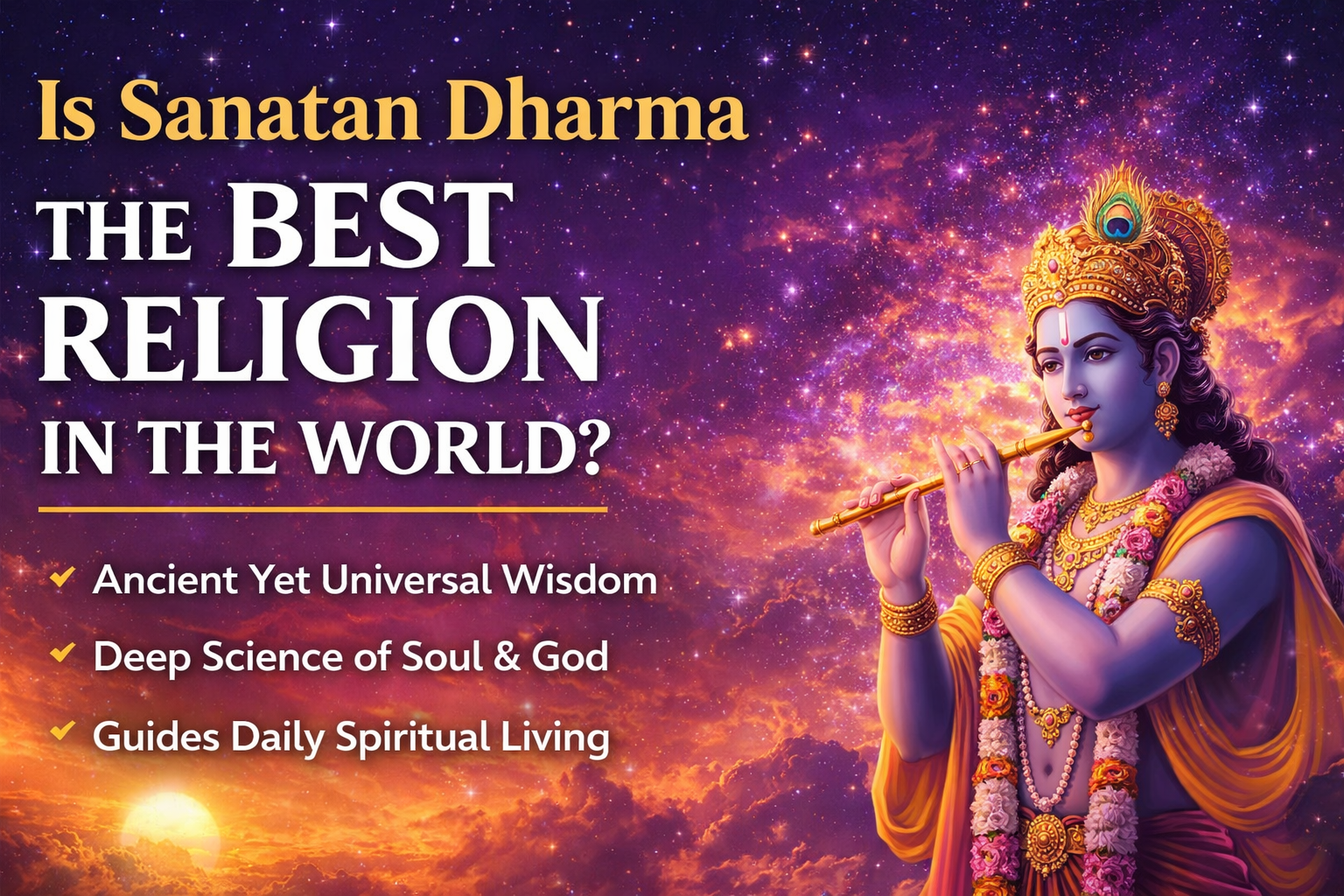
Is Sanatan Dharma the Best Religion in the World?
Confusion! Confusion! Confusion! Many a time you might have asked yourself and others as well regarding religion. What is religion? What are its fundamentals? What is its importance in common living or in our day-to-day life? All these questions must have arrived once in your dear dreams, very often if you are really a genuine spiritual seeker. But don’t worry, all of your questions and doubts would be cleared in today’s discussion. Modern world, modern people, modern confusion — but the topic is still old: what is spirituality and religion? So now before knowing what is spirituality, we should first know what is not spirituality. → Here are some points which completely contradict the real meaning of spirituality: a) Spirituality is only a means of relaxing the mind.b) Spirituality means regulating duties and not following any rules and regulations.c) Spirituality brings material prosperity.d) Spirituality is only restricted to caste, nation and society. → These are some points which definitely are not related to spirituality or dharma. So the question still remains: what is the actual meaning of ‘dharma’? What is the Real Meaning of Dharma → The real meaning of dharma is already explained in Srimad Bhagavatam ŚB 6.3.19 dharmaṁ tu sākṣād bhagavat-praṇīta ṁ na vai vidur ṛṣayo nāpi devāḥ na siddha-mukhyā asurā manuṣyāḥ kuto nu vidyādhara-cāraṇādayaḥ Real religious principles are enacted by the Supreme Personality of Godhead. Although fully situated in the mode of goodness, even the great ṛṣis who occupy the topmost planets cannot ascertain the real religious principles, nor can the demigods or the leaders of Siddhaloka, to say nothing of the asuras, ordinary human beings, Vidyādharas and Cāraṇas. → Real religious principles are enunciated. → Dharma is truly connected to the soul, not to the body. No doubt, for maintaining the body, we also have to follow dharma, but that would also be prescribed by the self-scriptures. More Scientific and Broad Meaning of Sanatan Dharma The word ‘Sanatan’ is derived from the Sanskrit language, which means ‘eternal’. As the name suggests, Sanatan Dharma is eternal, meaning it is beginning-less and endless. → Sanatan Dharma teaches the way of living. → Sanatan Dharma not only teaches us to get out of this world but also tells us how we should live in our day-to-day life. → Vedic scripture has four pillars — dharma, artha, kama, and moksha — and Sanatan Dharma gives the information for all. → Dharma is used for generating artha, artha is used to fulfil kama, and when kama does not get satisfied, then it gives birth to desire for moksha. Two Types of Dharma Deh Dharma (religion for the body) As we all are stuck in the material body despite being originally the soul, we need to perform some actions to maintain the body. The actions performed to maintain the body under the direction of scriptural injunctions are called Deh Dharma. Atma Dharma (religion for the soul) Atma Dharma has nothing to do with the body. It is fully connected to the soul. We all are part and parcel of Krishna, but due to our tendency to enjoy the material nature, we are stuck in this material world. So we try to go out of the wings of “maya” (the material energy), and those actions which are directed towards this mission are called Atma Dharma. Unique Features of Sanatan Dharma Eternality Sanatan Dharma — the owner or founder of Sanatan Dharma is still unknown. Nobody knows who has created Sanatan Dharma. Every religion has its founder person who established that particular religion, but the founder of Sanatan Dharma is still unknown. → Fun fact: Actually it is unknown for the author, but we are mere… Scriptural Evidence The Bhagavad Gita explains who created Sanatan Dharma. It is Krishna (the Supreme God) who has created this Dharma. He himself has confirmed in the Bhagavad Gita. Bg. 15.15 sarvasya cāhaṁ hṛdi sanniviṣṭo mattaḥ smṛtir jñānam apohanaṁ ca vedaiś ca sarvair aham eva vedyo vedānta-kṛd veda-vid eva cāham I am seated in everyone’s heart, and from Me come remembrance, knowledge and forgetfulness. By all the Vedas, I am to be known. Indeed, I am the compiler of Vedānta, and I am the knower of the Vedas. Soul Concept The concept of ‘soul’ is very unique in Sanatan Dharma. Other religions do not talk much about the soul; some religions do not accept the existence of the soul, and some simply deny it. But Sanatan Dharma is the only religion in the world which not only tells about the soul but also gives a detailed scientific explanation of the soul. For more info, you can read the Bhagavad Gita. There are so many verses like BG 2.13, etc. God as Personality or Person Last but not least, Sanatan Dharma clarifies the most heated debate in the world: “Who is God?” Sanatan Dharma clearly depicts that God is a person and His name is “Krishna”, the all-attractive. Many and many references in the scriptures clearly depict that God is not impersonal. He is a Śrī Brahma-saṁhitā 5.1 īśvaraḥ paramaḥ kṛṣṇaḥ sac-cid-ānanda-vigrahaḥ anādir ādir govindaḥ sarva-kāraṇa-kāraṇam Kṛṣṇa who is known as Govinda is the Supreme Godhead. He has an eternal blissful spiritual body. He is the origin of all. He has no other origin and He is the prime cause of all causes. Conclusion After reading the complete blog, I am pretty sure you might have got a smart idea that, yes, it is only Sanatan Dharma which can be the best religion in the world. The purpose of this blog was not to defame any other religion or to just prove the superiority of Sanatan Dharma over others. It was just an innocent attempt to clarify the doubts regarding religion and Sanatan Dharma, especially among youth, so that they could not be misled and they could get the original information from the original source. And that is the aim of Prabhupad Ashraya. There were so many more things to tell in this regard, but I have only said as

Is Ramayana Real? Facts, Evidence, and Spiritual Insights
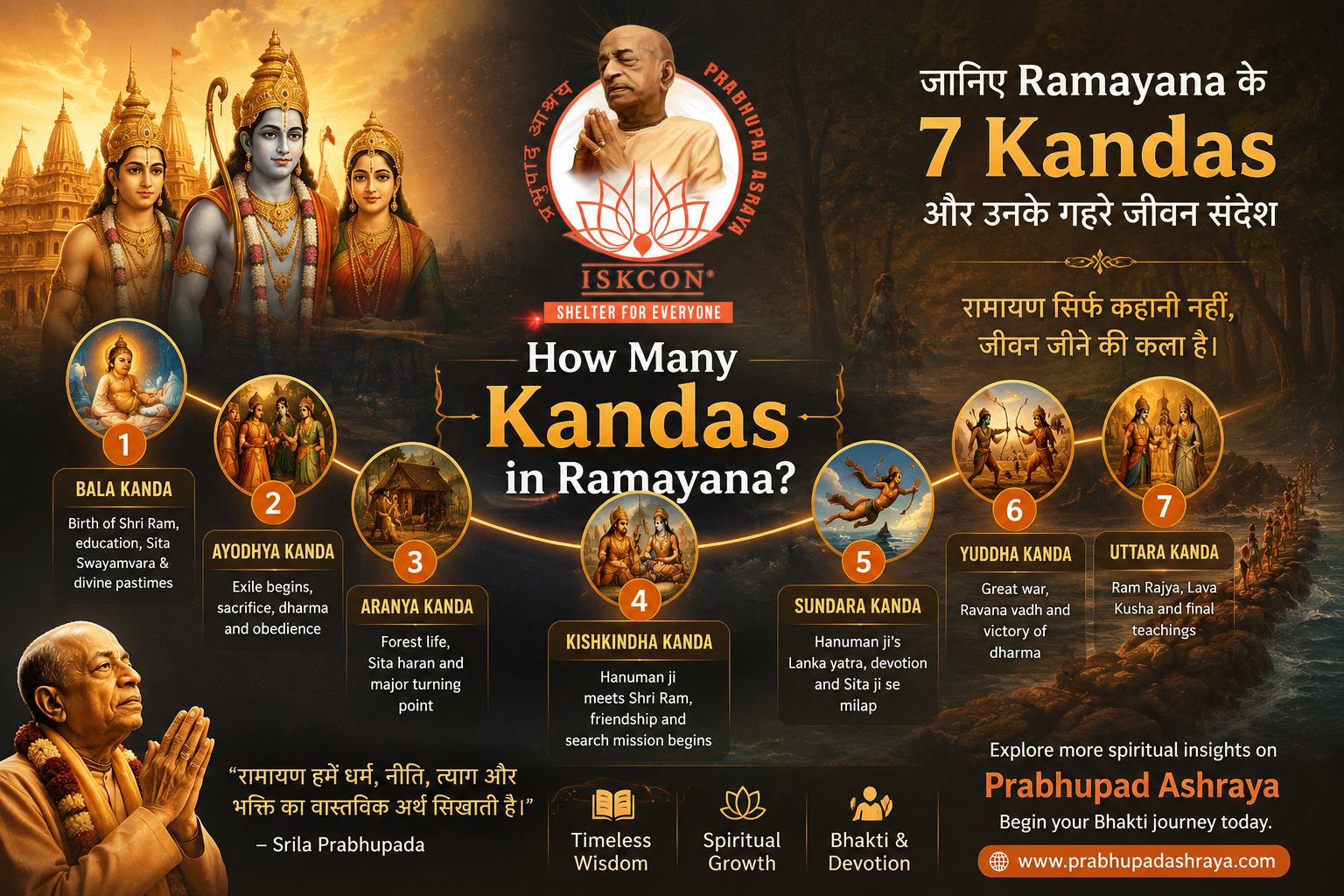
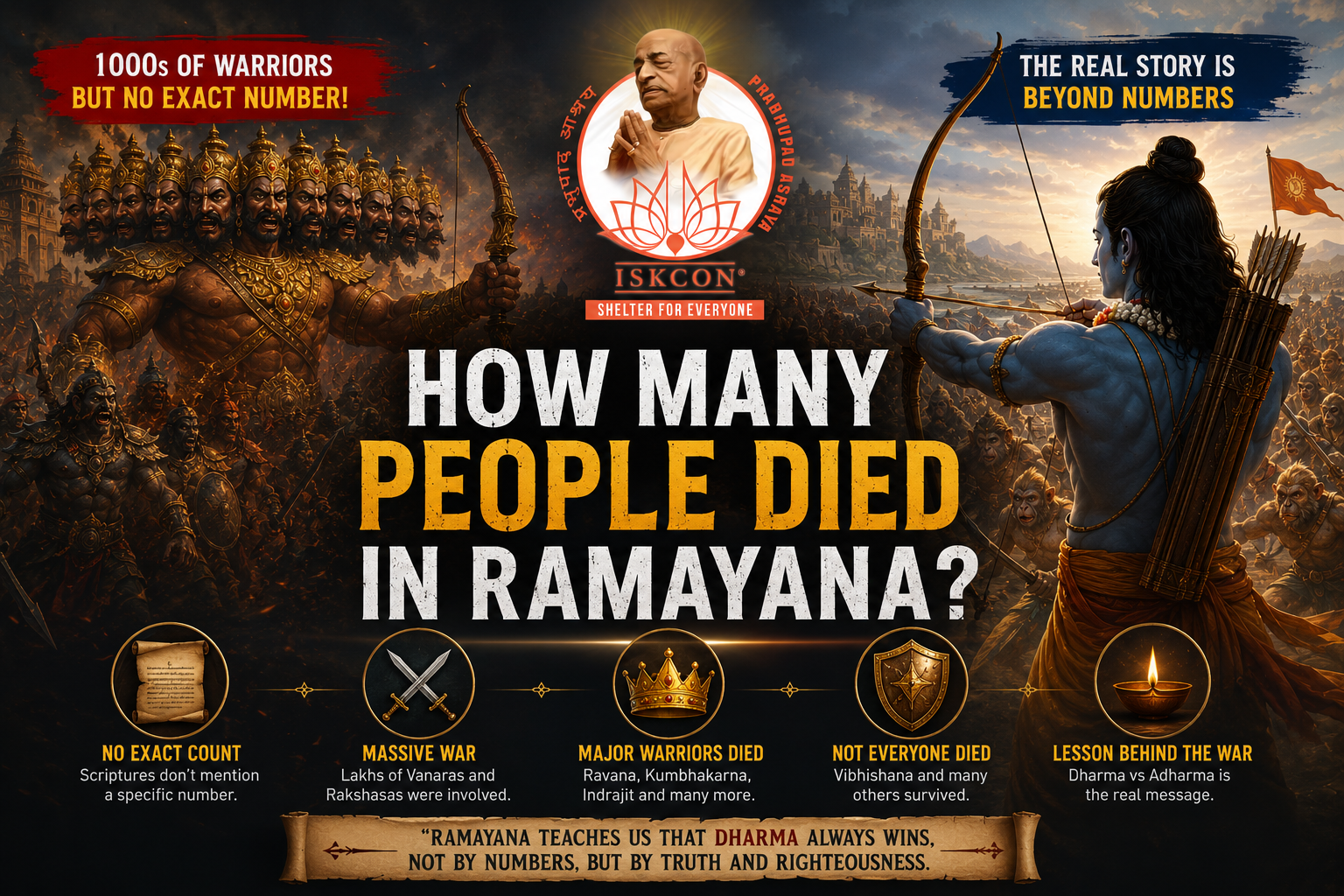
Introduction: Sach kya hai — Myth ya Reality? “I will not say it is subjective, as many bloggers and so-called experts say… rather, I am 100% sure that the Ramayana was real.” Yeh line bold lag sakti hai, lekin ruk jao — blindly believe karne ki zarurat nahi hai. Aaj hum baat karenge logically, calmly, bina kisi bias ke. Aaj ke modern world mein ek question baar-baar uthta hai: Is Ramayana real? Aur iske saath hi dusre sawal bhi jud jaate hain — Did Lord Rama eat meat? Did Ram Setu really exist? Why did Lord Rama leave Mother Sita when she was pregnant? Why was Agni Pariksha taken? Yeh sirf religious questions nahi hain; yeh identity ke questions hain. Faith ka bhi issue hai, history ka bhi, aur personal belief ka bhi. Sach bolo toh — ek taraf bhakts hain jo kehte hain sab kuch literal truth hai. Dusri taraf log hain jo kehte hain sab mythology hai. Aur beech mein ek bada confused audience hai — jo samajhna chahta hai. Toh iss blog mein hum over-smart nahi banenge. Na blindly believe karenge, na blindly reject karenge. We will look at facts, evidence, and spiritual insights. Aur haan, jo bhi conclusion hoga, wo aap khud decide karoge. What is the Ramayana? Sabse pehle basic clarity zaruri hai. Ramayana sirf ek kahani nahi hai. Yeh ek civilisational memory hai — ek aisa granth jo hazaron saalon se logon ki life shape kar raha hai. Isko likha tha Valmiki ne — jise hum Vālmīki bhi kehte hain. Isi liye ise Valmiki Ramayana, Ramayan by Valmiki, ya simply Ramayan book bhi bola jata hai. Agar aapne kabhi suna ho ya padha ho — Ramayan Katha, Ramayanam, ya even animated version Ramayana: The Legend of Prince Rama — sab isi original source se nikle hain. Story simple lagti hai: Ayodhya ke prince Rama14 saal ka vanvaasSita haran by RavanaHanuman and Rama’s divine connectionLanka warDharma ki jeet Lekin yeh sirf plot nahi hai. Yeh ek life framework hai. India mein dekho — bina context ke bhi log bol dete hain “Jai Shree Ram”. Kyun? Kyunki yeh kahani unke andar bas chuki hai. Yeh Bollywood movie nahi hai jo release hui aur khatam ho gayi. Yeh ek aisi story hai jo generation se generation pass hoti rahi hai — almost like a living tradition. The Core Question: Real or Myth? Ab aate hain main point par. “Real” ka matlab kya hai? Kya hum expect kar rahe hain ki Ramayana ek documentary proof ho? Ya phir ek symbolic truth bhi acceptable hai? Sceptics kehte hain: It is mythologyImagination haiCultural storytelling hai Believers kehte hain: It is historicalIt is divineIt actually happened Sach kya hai? Honestly, dono sides ko ignore nahi kar sakte. Ek taraf logical questioning hai, dusri taraf deep tradition aur faith. Toh best approach kya hai? Balanced rehna. Na andh-vishwas, na andh-virodh. Historical Evidence: Kya koi base hai? Agar Ramayana sirf imagination hota, toh usme itni geographical detailing kyun hoti? The Ramayana clearly mentions places like: AyodhyaChitrakootRameswaram Yeh sab jagah aaj bhi exist karti hain. Aur sirf exist nahi karti — thousands of years se pilgrimage centres hain. Ikshvaku dynasty ka mention bhi aata hai — ek proper royal lineage. Yeh koi random fairy tale structure nahi hai. Aap khud socho — agar koi kahani banani hoti, toh itni detailed genealogy aur geography ki zarurat hi kya thi? Yeh cheez is baat ki taraf ishara karti hai ki story ka base strong hai. Archaeological & Scientific Clues Ab sabse controversial topic… Ram Setu Ram Setu ek aisa structure hai jo India aur Sri Lanka ke beech dikhta hai. Satellite images mein clearly ek bridge-like formation dikhai deti hai. Debate yahan start hoti hai: Scientists bolte hain natural formation haiBelievers bolte hain Vanar sena ne banaya Sach kya hai? Honestly, science abhi tak conclusive answer nahi de paayi. Aur ek baat samajhni zaruri hai — modern science ki limitations hoti hain. Har ancient cheez ko laboratory mein prove nahi kiya ja sakta. Jaise hum apne great-grandfather ko personally nahi mile, iska matlab yeh nahi ki woh exist nahi karte the. Global Evidence: Sirf India tak limited nahi Yeh section thoda mind-blowing hai. Agar Ramayana sirf Indian myth hota, toh duniya ke itne countries mein iska version kyun milta? Let’s see: Malaysia: Hikayat Seri RamaIndonesia: Kakawin RamayanThailand: Ramakien (national text)Cambodia: Rama KerthiBurma: Yama ZatdawPhilippines: Maharadia Lawana (with Singkil dance)China: Liu du ji jing (mentions Rama)Japan: Two versions exist Even Pakistan — Lahore ka naam Luvpuri se aaya mana jata hai. Europe mein: Rome — Rama se derivedRavenna — Ravana Egypt mein: Kings called RamsesQueen Sitamen Russia: Rivers named Sita, Rama, MokshaVishnu deities found South Korea: Ayodhya’s princess Suriratna married King Kim SuroAaj bhi millions log us lineage se connected hain Ab honestly socho… Kya itna widespread connection coincidence lagta hai ya kuch deeper indication? Prabhupad Ashraya: Youth ko direction Aaj ka youth confused hai. Information overload hai — clarity zero. Is gap ko fill karne ke liye platforms jaise Prabhupad Ashraya ka role important ho jata hai. Yahan par: Bhagavad Gita simple language mein samjhayi jaati haiDoubts logically clear kiye jaate hainBhakti ko practical banaya jata hai Kyuki sirf debate se kuch nahi hota. Understanding zaruri hai. Spiritual Perspective: Sab proof se upar Ab ek deeper angle dekhte hain. Sanatan Dharma ke hisaab se truth sirf physical nahi hota. Bhagavad Gita ke according: God kabhi-kabhi avatar lete hainDharma establish karne ke liye Lord Rama ko “Maryada Purushottam” kaha jata hai. Unka life ek ideal model hai. Yahan focus yeh nahi hai ki proof mile ya na mile… Focus yeh hai ki unki teachings life ko kaise transform karti hain. Symbolic Meaning: Inner Ramayana Ek aur interesting angle hai. Ramayana ko agar metaphor ke roop mein dekho: Rama = righteousnessRavana = egoSita = purityLanka = material world Har insaan ke andar ek Ram aur ek Ravan hai. Daily life mein jab ego aata hai, jab anger aata hai — wahi internal battle start ho jati hai.

Largest Religions in the World (2026): Shocking Facts You Didn’t Know
Introduction: Is Truth Decided Just by Numbers? Have you ever wondered which is the largest religion in the world — and more importantly, does being “largest” actually mean being “true”? In today’s time, there is talk about religion everywhere. Every religion has its own followers, its own beliefs, and its own identity. But when we compare — especially on the basis of numbers — a natural question arises: Which is the biggest? But here lies a deeper confusion as well. Is it because more people are following it? Does it mean that path is correct? Or is truth something else entirely — something that goes beyond numbers? In this blog, we will look at the largest religions in the world (2026) — along with some shocking facts that you probably haven’t thought of before. What is Religion? Let’s Understand Simply Before jumping into rankings, basic clarity is essential. Religion is basically a system — of beliefs, practices, and values — that connects a human being to a higher reality, to a God, or to an ultimate truth. But all religions are not the same. Some religions are rule-based — what to do, what not to do. Some are faith-based — believe and follow. And some are philosophy-based — understand, explore, experience. This is where a little confusion comes in. Because calling every system a “religion” also becomes a bit of an oversimplification. Top 5 Largest Religions in the World (2026) Now let’s talk directly about numbers. 1. Christianity Christianity is considered the world’s largest religion, with more than 2 billion followers. It has a strong presence in Europe, America, and Africa. This is a faith-based system where belief plays a central role. 2. Islam Islam is the second-largest religion and is also considered the fastest-growing. It has a strong influence in the Middle East, South Asia, and Africa. Discipline and daily practices are at its core. 3. Hinduism (Sanatan Dharma) This one is interesting. Hinduism, or what is actually Sanatan Dharma, is one of the world’s oldest traditions. The majority is in India and Nepal, but its influence is global. And the most unique part — it is not just a religion, but a way of life. 4. Buddhism Buddhism is based on the teachings of the Buddha. It focuses more on: Mindfulness Detachment Inner peace It has a strong presence in East Asia. 5. Sikhism and Others Sikhism is relatively smaller in numbers, but is known for its strong identity and values. There are also many other traditions that exist globally. Remember one important thing: Numbers show size, but they don’t show depth. Shocking Facts You Didn’t Know Now for the interesting part. Here are some facts that will force you to think: Not every religion grows at the same speed Many people follow religion by birth, not by understanding A lot of people are culturally religious, not spiritually Most interesting of all: Sanatan Dharma has no single founder. Otherwise, almost all religions’ founders are known. But here, the origin itself is considered eternal. The word “Sanatan” itself means — eternal (no beginning, no end). And another surprising thing: Yoga, meditation, karma — all these concepts that are popular in the modern world today actually come from ancient traditions. So technically, what the modern world is adopting… is already thousands of years old. A bit mind-blowing, isn’t it? Beyond Numbers: Is Truth Decided by Size? Now an honest question. If tomorrow a religion suddenly becomes the most popular — will it automatically become true? Obviously not. Even on social media today, trends keep changing. What is viral today becomes irrelevant tomorrow. Truth is not like that. Truth is stable. It is consistent. Therefore, using only numbers to judge any path is a somewhat incomplete approach. What is a better approach? Logic Personal experience Consistency over time Sometimes, the thing that is the oldest… is the most deeply tested. Unique Perspective: Sanatan Dharma Now let’s focus a bit on a unique system. Sanatan Dharma — which is generally known by the name Hinduism — does not behave like a typical religion. It has no founder. It has no fixed starting point. It is an evolving philosophy. Its core concepts are: Dharma (duty) Karma (action) Moksha (liberation) And most importantly — it gives human beings the freedom to question. It says: understand, experience, and then accept. That is why many people also call it a “life science”. Why This Topic Matters Today In today’s modern world, people are confused. Identity crisis Missing purpose High stress In such times, religion or spirituality can give a direction. But blindly following is not a solution. Understanding is necessary. Because when understanding comes, clarity follows. Conclusion: What is the Right Question? So finally… We saw: An overview of the largest religions Some surprising facts A deeper perspective Now the question is not which religion is the largest. A better question is: Which path is truly giving me understanding and clarity? Because in the end, the goal is not numbers… The goal is truth and transformation. Call to Action If you found this topic interesting, don’t stop here. Explore. Question. Understand. You can start with texts like the Bhagavad Gita — which address the deeper questions of life. And if you like such topics: YouTube: Prabhupad Ashraya Instagram: @prabhupad_ashraya Do share your thoughts as well — According to you, does size matter? Or is truth something else? Hare Krishna Kya aapko iss translation mein SEO meta description, titles, ya keywords check karwane hain?

Why Are Youth Losing Interest in Spirituality? (And How to Fix It)
Introduction: A Silent Crisis Among Youth Today’s youth is smarter than ever. They are ambitious, connected, and full of potential. But at the same time, something feels missing. Despite having everything — smartphones, opportunities, freedom — there is still stress, anxiety, and a constant feeling of emptiness. And one surprising observation is this: Youth is slowly losing interest in spirituality. But why? Is spirituality outdated?Is it irrelevant in modern life?Or has it been presented in the wrong way? Sach bolun toh, problem spirituality mein nahi hai… Problem usko samjhane ke tareeke mein hai. In this blog, we’ll break down the real reasons behind this shift and explore practical ways to reconnect youth with true spirituality. What Does Spirituality Actually Mean? Before we blame the youth, let’s first understand one thing clearly — what is spirituality? Many people think spirituality means: Leaving everything and going to the forest Becoming overly serious or detached Following rituals blindly But that’s not the real meaning. Spirituality is about: Understanding who you truly are Connecting with a higher reality Living with clarity, purpose, and inner peace In simple words,Spirituality is not about escaping life; it is about understanding life. Agar simple language mein bolein — spirituality ka matlab life ko deeply samajhna hai, na ki usse bhagna. Why Are Youth Losing Interest in Spirituality? Now let’s come to the real issue. 1. Wrong Presentation of Spirituality One of the biggest reasons is how spirituality is presented. Often, it is shown as: Boring Strict Only for old people No wonder youth doesn’t feel attracted to it. They want something meaningful, practical, and relatable — not something that feels forced or outdated. 2. Social Media and Constant Distraction Today’s world is full of distractions. Instagram reels Short videos Endless scrolling All these things reduce attention span and create a habit of instant gratification. Spirituality, on the other hand, requires: Patience Reflection Inner focus Aur jab mind already overloaded ho, toh naturally deeper cheezon mein interest kam ho jata hai. 3. Lack of Proper Guidance Another major issue is the absence of genuine guidance. Many youths: Don’t have a mentor Don’t know where to start Feel confused between religion and spirituality Some even think spirituality means following a particular community blindly, which is not true. Without proper direction, confusion grows… and interest fades. 4. Blind Rituals Without Understanding Let’s be honest. Many people are told: “Do this ritual.” “Follow this rule.” But no one explains why. Today’s youth is logical. They want reasons, not instructions. Agar unhe samjhaya hi nahi jayega, toh wo follow kaise karenge? This creates distance instead of connection. 5. Fear-Based Messaging Sometimes spirituality is presented in a negative way: “God will punish you.” “If you don’t follow this, something bad will happen.” This creates fear, not love. But real spirituality is about connection, not fear. Real-Life Signs of This Disconnection You can clearly see the effects of this disconnect in everyday life. People are more anxious than ever Overthinking has become normal There is a lack of purpose Constant comparison and dissatisfaction Sab kuch hone ke baad bhi andar se empty feel hona — this is the real problem. This shows that something deeper is missing. How to Fix It? Practical Solutions Now comes the most important part — how do we fix this? 1. Make Spirituality Practical Spirituality should not feel separate from life. It should connect with: Daily decisions Relationships Mental health When youth sees practical value, interest automatically increases. 2. Use Logic and Real-Life Examples Instead of forcing beliefs, we should explain spirituality using: Logic Real-life examples Scientific understanding For example: Karma can be explained through cause and effect Mind control can be linked with psychology When spirituality makes sense, it becomes attractive. 3. Start Small (Micro Habits) Big changes are not needed. Start with simple steps: 5 minutes of chanting daily Reading one spiritual verse Practicing gratitude Consistency matters more than intensity. Chhote steps hi long-term transformation laate hain. 4. Focus on Love, Not Fear Spirituality should be presented as: A source of peace A path of love A connection with the divine Not as a system of punishment. When people feel safe and connected, they naturally move closer. 5. Build a Supportive Community Environment matters a lot. When youth is surrounded by: Like-minded people Positive discussions Genuine guidance They feel inspired. Akele struggle karna mushkil hota hai, but together it becomes easier. Role of Prabhupad Ashraya in Transforming Youth In today’s time, platforms like Prabhupad Ashraya are playing a very important role. Instead of making spirituality complicated, they are simplifying it for youth. They focus on: Explaining Bhagavad Gita in simple language Clearing doubts logically Making spirituality relatable and practical Through: Classes Social media content Interactive discussions They are helping young people reconnect with their spiritual roots. Yahan spirituality ko boring nahi, engaging banaya jata hai — aur wahi aaj ki sabse badi need hai. Why Youth Needs Spirituality More Than Ever Let’s be real. Today’s youth is facing: Pressure Confusion Competition Emotional instability In such a situation, spirituality is not optional — it is necessary. It provides: Inner peace Clarity of thought Strong values Sense of purpose Aaj ka youth intelligent hai… bas usse sahi direction chahiye. And spirituality can provide that direction. Conclusion: The Truth No One Talks About So what’s the real conclusion? Youth is not losing interest in spirituality. Youth is losing interest in misrepresented spirituality. When spirituality is: Forced → it feels heavy Illogical → it feels fake Fear-based → it feels distant But when spirituality is: Logical Practical Loving It becomes powerful. The goal is not to force youth into spirituality. The goal is to present spirituality in the right way. Call to Action If you are someone who feels disconnected, don’t worry. Start small. Take one step towards understanding yourself. Explore genuine spiritual knowledge like the Bhagavad Gita. And if you want guidance, you can connect with platforms like Prabhupad Ashraya that are helping thousands of youths rediscover spirituality. Aapka kya

Why Does Lord Vishnu Take Different Avatars?
Introduction Yes, I know that you have come here to know why Lord Vishnu or Krishna comes again and again in this world, but I wouldn’t tell you here the reason, as the reason is already known by you. Let’s say when you feel highly depressed or tense sometimes, then whom do you call? “Mother”, “Father” and at last “God”. So, here is the answer you were searching for. But it is not finished. Don’t you want to know in what form, time, and place Krishna or Vishnu appears? So, now let us see systematically. What is an Avatar You might have seen the Hollywood movie “Avatar” and might have thought that this name of the movie sounds like the “Avtar” which we used to listen to in our childhood, and yes, it is not different than that. ‘Avatar’ means the divine incarnation of a particular person, entity or super being which constitutes all the qualities of the original one. In a similar context, Lord Vishnu also incarnates himself in divine forms in different yugas, or time periods. 10 Incarnations of Lord Vishnu Let us have a short look at the divine incarnation of the Lord: Matsya (The fish) Kurma (The tortoise) Varaha (The boar) Narasimha (The man-lion) Vamana (The dwarf) Parashuram (The warrior) Lord Rama (The prince) Lord Balarama Buddha Kalki Different Situations, Different Avatars Now let’s have a look at the divine incarnation one by one: 1. Matsya The Matsya avatar appeared in Sat-yuga when King Manu was requesting Lord Vishnu to find an escape from the problem of the Hayagriva demon, who had stolen the Vedas. 2. Kurma “God requires hard work.” When at the age of Sat-yuga demigods and demons were doing the Samudra Manthan, and then they required some base to behold the Mandar mountain. 3. Varaha Goddess Earth was shattered and left lonely and alone when the Hiranyaksha demon was at his peak. To save his world, then at that moment of hopelessness, Lord Varaha appeared from the nose of Brahma. 4. Narasimha Imagine a person coming in front of you having very large and sharp nails, a muscular body, and teeth larger than fingers. Similar was the condition of Hiranyakashipu when he saw Lord Narasimha Dev in front of him. 5. Vamana What if I tell you that the length of the universe is only two steps? No, I am not kidding. This was the divine ability of the 5th incarnation of Lord Vishnu as Vamana Dev. 6. Parashuram If there is any person in this world who can vanquish the Kshatriya 21 times, then he can be no different from Lord Parashuram himself. He is the 6th incarnation of Lord Vishnu and the first in Treta Yuga, because before him all the avatars belonged to Satya Yuga. 7. Lord Rama In parallel to Lord Parashuram, one dark bluish-complexioned boy had a bow in his hand and a vow in his mind of having an exile of 14 years in the forest. 8. Balarama No, I am not mistaken; the eighth incarnation of the lord is Balarama, not Krishna. You might have heard from childhood that Krishna is the eighth incarnation of Lord Vishnu, but actually it is not true. The eighth incarnation is Balarama. Because Krishna is the supreme personality of Godhead, and from him Vishnu comes. Again, it is a very debatable topic, so it should be discussed in a separate blog that asks, “Does Vishnu come from Krishna, or does Krishna come from Vishnu?” 9. Buddha The incarnation of Lord Buddha has always been in controversy because many Buddhists do not believe that Buddha was the incarnation of Lord Vishnu, but it is mentioned in our scriptures that Lord Buddha was the incarnation of Vishnu. Even the very famous Vaishnava poet Jayadeva Goswami had mentioned in his 10th avatara shloka that Lord Vishnu had appeared in Kali-yuga as Lord Buddha before. 10. Kalki When everything ends, then something remains—and that something is the last and final avatar of Lord Vishnu, that is, Kalki Avatar. This avatar of Lord Vishnu is yet to come. Scriptures say that this avatar will appear at the end of Kali Yuga, when the corruption will be at its peak. Then Kalki Avatar will arise and will provide liberation to all the people. Then the Kali Yuga will end and the next Chatur Yuga will start. Lord Chaitanya Mahaprabhu / The Hidden Avatar All the above avatars mentioned are clearly seen in scriptures and are known by everyone. But do you know there is one more avatar mentioned secretly in the scriptures? That is Shri Krishna Chaitanya Mahaprabhu. He is also known as the “Channa”, or hidden avatar, because in his whole life, Shri Krishna Chaitanya Mahaprabhu never revealed his original identity to everyone. Only his close associates knew about this secret. There are many things to say about Shri Krishna Chaitanya Mahaprabhu, but it requires a separate blog. So we will discuss Lord Shri Krishna Chaitanya Mahaprabhu in another blog.